Table of Contents The Role of Active Palliation in Hospice Care The Core Principles of Palliative Care Active Palliation in Practice: How Comfort and Symptom Control Are Delivered Understanding Active Palliation The Phases of Palliative Care The Multidisciplinary Palliative Team Bringing Palliation to Life: How Amara Supports Families Starting the Conversation About Palliative Care What …

Table of Contents
- The Role of Active Palliation in Hospice Care
- The Core Principles of Palliative Care
- Active Palliation in Practice: How Comfort and Symptom Control Are Delivered
- Bringing Palliation to Life: How Amara Supports Families
- Eligibility, Cultural Sensitivity, and Advanced Comfort Approaches
- Common Questions About Palliation and Hospice Care
- Embracing Comfort and Dignity in Care
The Role of Active Palliation in Hospice Care
Active palliation, often searched online as “what is active palliation?”, is a proactive approach to managing pain, symptoms, and emotional distress for patients with life-limiting illness. It is an ongoing, iterative process that evolves as the illness progresses, keeping comfort and quality of life at the forefront at every stage.
Unlike care that focuses exclusively on the final days, active palliation begins early in the disease course and continues alongside the natural trajectory, even when curative treatments are no longer pursued. In the hospice setting, this patient-centered approach becomes the primary focus, aiming to relieve suffering rather than cure disease. This fully aligns with hospice’s holistic philosophy, which treats the whole person, body, mind, and spirit.
At Amara Hospice Care, we embed active palliation into every aspect of our comprehensive services. Our multidisciplinary team, including physicians, nurses, social workers, and chaplains, provides pain management, comfort care, and psycho-social support that adapts as a patient’s condition evolves. By attending to the whole person, body and soul, we strive to bring relief and preserve dignity for both patients and the families who walk through the journey with them.
Understanding how active palliation works day to day sets the stage for exploring the foundational principles that guide all palliative care decisions.
Key Takeaways
- Palliative care is a specialized medical approach dedicated to improving the quality of life for individuals facing serious illnesses.
- To understand what active palliation means in daily care, we look at how comfort and symptom control are delivered.
- Bringing active palliation to life means supporting the whole family—not just managing symptoms—by offering compassionate guidance, a dedicated team, and wrap-around services.
- At Amara Hospice Care, we support families across Saginaw by adapting our care to each person’s unique journey.
- Understanding eligibility and comfort approaches naturally leads to questions about daily palliation and hospice care.
The Core Principles of Palliative Care
Palliative care is a specialized medical approach dedicated to improving the quality of life for individuals facing serious illnesses. Understanding what palliative care focuses on reveals its commitment to treating the whole person, not just the disease. This patient-centered philosophy addresses physical, emotional, social, and spiritual needs, ensuring that every aspect of a person’s well-being is considered in their care plan.
Whole-person care means we look beyond the diagnosis. For example, our interdisciplinary team, which includes physicians, nurses, social workers, and chaplains, meets regularly to coordinate efforts, ensuring that pain is managed, emotional distress is addressed, and family concerns are heard.
Expert symptom management is another cornerstone. Through vigilant monitoring and personalized interventions, we strive to relieve discomfort from pain, nausea, or breathlessness. A patient with advanced heart failure, for instance, might receive adjustments in medication for fluid management alongside breathing exercises taught by our therapists, all aimed at promoting comfort and function.
Open, compassionate communication is fundamental. We facilitate advance care planning conversations early, helping patients and families understand their options and make informed choices. These discussions build trust and ensure that care aligns with personal values. Family support extends beyond the patient, offering counseling, respite, and guidance through every stage of illness.
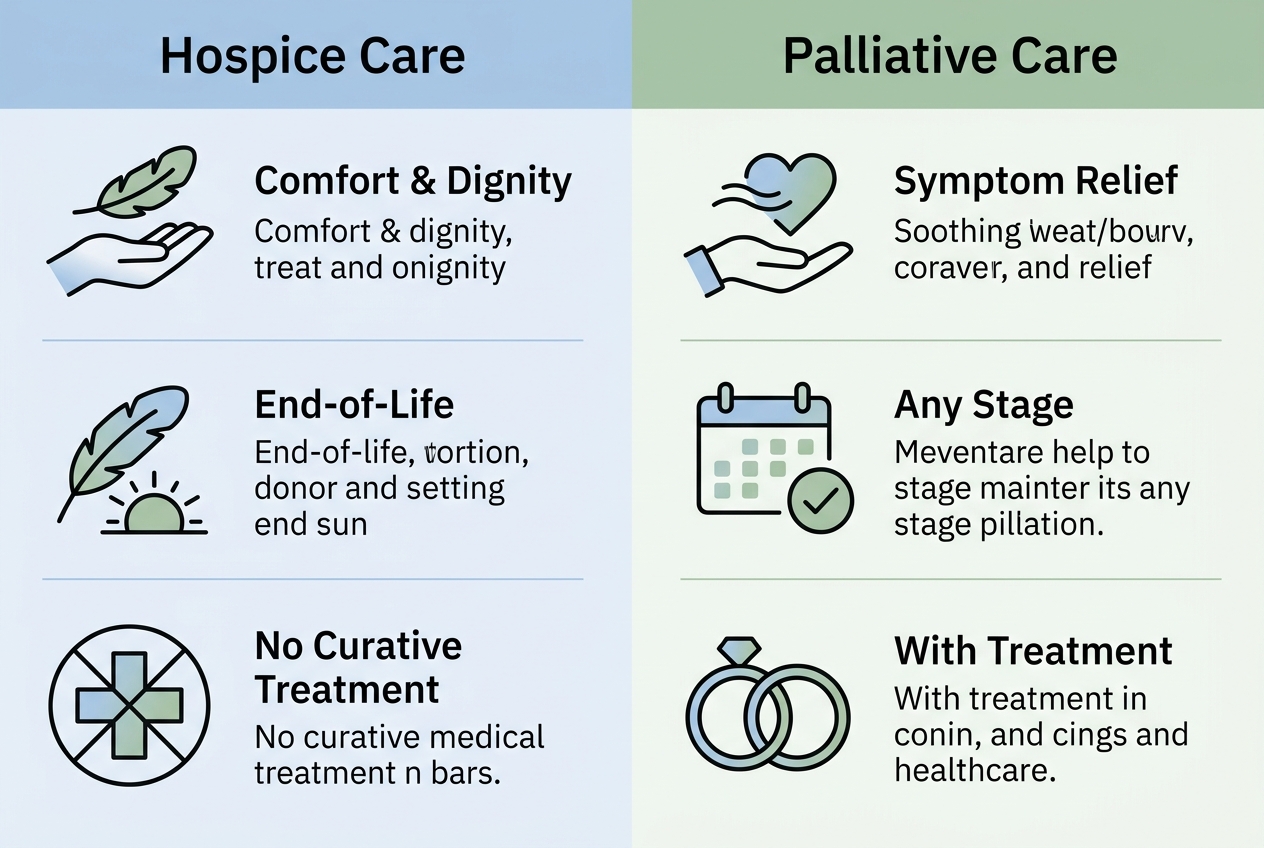
Distinguishing palliative care from hospice is essential for understanding the full spectrum of support available. While both share these core principles, their application differs significantly. The table below outlines the key distinctions.
| Aspect | Palliative Care | Hospice Care |
|---|---|---|
| Goal of Care | Improve quality of life alongside curative treatment | Focus on comfort when cure is no longer sought |
| When It Is Provided | Any stage of serious illness | End-of-life, typically last 6 months |
| Curative Treatment | Yes, can be combined | No, comfort-focused only |
At Amara Hospice Care, we deliver caring and compassionate hospice services that reflect these principles. When the focus shifts entirely to comfort, our team provides symptom control and emotional support without curative intent. This distinction ensures patients receive the right level of care for their unique journey.
These principles are not merely ideas; they are put into action every day through practical comfort and symptom management techniques. By combining expert knowledge with genuine empathy, we uphold a mission of grace that honors each person’s dignity and helps them live as fully as possible.
Active Palliation in Practice: How Comfort and Symptom Control Are Delivered
To understand what active palliation means in daily care, we look at how comfort and symptom control are delivered. Active palliation is a proactive, holistic strategy that relieves symptoms and preserves quality of life from the moment advanced illness is diagnosed. The following table highlights how palliative care addresses three critical dimensions of well-being.
| Phase | Palliation Focus | Typical Support |
|---|---|---|
| Physical Symptoms | Symptom relief and medication | Painkillers, laxatives, steroids; relaxation techniques, acupuncture, breathing exercises |
| Emotional Needs | Emotional support from the team | Counselling, social work, and family support from the multidisciplinary team |
| Spiritual Needs | Holistic comfort care | Pastoral care, spiritual support, and whole-person attention from chaplains and volunteers |
These supports are woven through every phase of care, whether a person is in early treatment or nearing the end of life.
Understanding Active Palliation
Active palliation is not merely a shift away from curative treatment. It is a proactive, multidisciplinary strategy that addresses a person’s full range of physical, emotional, and spiritual needs from the moment advanced illness is diagnosed. Cancer Research UK emphasizes that palliative care can begin early, alongside active therapies like chemotherapy or radiation, with the central goal of relieving symptoms and improving quality of life. This approach recognizes that comfort and dignity are essential priorities, not afterthoughts. Our team uses evidence-based interventions, from medication management for pain and nausea to non-drug techniques such as relaxation, breathing exercises, and complementary therapies, to help patients maintain their daily routines and emotional well-being. By intervening early, active palliation helps prevent crises and can extend the time patients live well.
The Phases of Palliative Care
Palliative care is not a single static service; it adapts as a serious illness progresses through distinct stages. Cancer Research UK makes clear that care can start at any stage after an advanced cancer diagnosis and is distinct from end-of-life care, which typically focuses on the final year. In the early phase, palliation runs alongside curative or disease-modifying treatments, managing side effects and supporting emotional stability. As the illness advances, comfort becomes the primary focus; treatments may shift toward reducing tumor-related symptoms without aiming for a cure. In the terminal phase, the emphasis turns to preserving dignity, relieving suffering, and ensuring that the patient’s final weeks are peaceful and surrounded by loved ones. Throughout each phase, the team adjusts medications, therapies, and psychosocial support to match changing goals and needs, always prioritizing comfort and quality of life.
The Multidisciplinary Palliative Team
A hallmark of active palliation is the coordinated effort of a multidisciplinary team. This team typically includes doctors, nurses, social workers, physiotherapists, dietitians, and pastoral care workers, all collaborating to address physical, emotional, and spiritual needs. Physicians and nurses oversee medical symptom management and pain relief, while social workers and therapists provide counseling, practical assistance, and emotional guidance. Spiritual care workers, including chaplains, offer comfort that goes beyond medicine, respecting each patient’s beliefs and wishes. This collective approach ensures that no aspect of a person’s well-being is overlooked. At Amara Hospice Care, we mirror this model by bringing together skilled professionals who work as one to create personalized care plans that honor each individual’s values and goals.
This multidisciplinary, comfort-centered approach reflects the comprehensive support that Amara Hospice Care extends to families, ensuring that every dimension of a loved one’s well-being is honored.
Bringing Palliation to Life: How Amara Supports Families
Bringing active palliation to life means supporting the whole family—not just managing symptoms—by offering compassionate guidance, a dedicated team, and wrap-around services.
Starting the Conversation About Palliative Care
Talking to a loved one about palliative care can feel daunting. At Amara Hospice Care, we understand the emotional weight of these conversations and are here to help. The best way to start is with gentle, open-ended questions that center on quality of life, such as “What matters most to you right now?” or “How can we make each day more comfortable and fulfilling?” These prompts invite the person to share their hopes and fears without pressure. It’s also helpful to clarify what palliative care means: this type of support can begin at any stage of a serious illness, even alongside treatments like chemotherapy or radiation. It is not about giving up—it is about improving daily comfort and emotional well-being from the moment of diagnosis. By framing the conversation around living well with a serious condition, you can help your loved one see palliative care as an empowering choice.
What to Expect From a Hospice Team
Once you decide to embrace palliative support, you may wonder what happens next. Our hospice team at Amara includes a multidisciplinary group of professionals: nurses, social workers, chaplains, certified aides, and trained volunteers. Each member works together to create a care plan tailored to the individual’s needs and goals. Typically, a nurse will visit regularly to assess symptoms, adjust medications, and answer questions. Social workers and spiritual care coordinators provide emotional and practical support, helping families navigate care decisions and find meaning. Our 24/7 on-call service ensures that you never face a crisis alone; a skilled professional is just a phone call away at any hour.
The Amara Care Model: Compassion in Action
At Amara, we bring palliation to life through a care model that treats the whole person—body, mind, and spirit. Our comprehensive services in Saginaw and surrounding communities include skilled nursing, pain management, massage therapy, music therapy, and spiritual care. Complementing these are practical supports like assistance with personal grooming and light recreation, all designed to preserve dignity and independence. The Amara Difference lies in how we weave these elements together: a dedicated volunteer corps offers companionship and respite for family caregivers, while our 24/7 on-call responsiveness ensures that help is always within reach. Drawing on evidence from groups like Cancer Research UK, we incorporate relaxation techniques and complementary therapies to ease discomfort and promote a sense of calm.
The table below illustrates how our services meet common palliative needs, offering families clear, practical support.
| Palliative Need | Amara Service | How It Helps |
|---|---|---|
| Pain and symptom management | Nursing care, pain management, massage and music therapy | Reduces discomfort, promotes relaxation, and improves quality of life |
| Emotional and spiritual support | Psycho-social services, spiritual care, bereavement services | Provides coping tools, comfort, and a sense of meaning |
| Daily living assistance | Personal daily living, recreation | Maintains independence and dignity |
| Family caregiver respite | Volunteer services, 24/7 on-call support | Gives families breaks and immediate access to professional support |
| Coordination of care | Multidisciplinary team (nurses, therapists, volunteers) | Ensures seamless, holistic care that adapts to changing needs |
This personalized, culturally sensitive approach ensures that every family receives care that fits their unique situation.
Eligibility, Cultural Sensitivity, and Advanced Comfort Approaches
At Amara Hospice Care, we support families across Saginaw by adapting our care to each person’s unique journey.
Palliative care can begin at any stage of a serious illness, not only at the end of life. It focuses on symptom relief and can continue alongside curative treatments. We provide active palliation, which is ongoing symptom management, so patients find relief. Hospice care, however, starts when curative treatments are no longer pursued and comfort is the priority, with a prognosis of six months or less. Since criteria vary, we offer a free assessment to confirm the best fit.
The following table summarizes key differences:
| Criteria | Palliative Care | Hospice Care |
|---|---|---|
| When care can start | Any stage of a serious illness¹ | When curative treatments are no longer pursued; typical prognosis of six months or less² |
| Care goal | Relieve symptoms and improve quality of life; may be given alongside curative treatment¹ | Maximum comfort and dignity without curative intent² |
| Treatment team | Multidisciplinary team managing physical, emotional, and spiritual needs¹ | Interdisciplinary hospice team: nurse, social worker, chaplain, volunteers³ |
| Setting | Hospital, outpatient, home¹ | Often at home or in a hospice facility in Saginaw County or the greater Detroit area³ |
¹ Cancer Research UK palliative care guidance. ² General hospice knowledge; exact criteria vary. Amara offers a free assessment to confirm. ³ Reflects Amara Hospice Care’s service model.
Culturally sensitive care means tailoring our approach to honor each family’s traditions, language, and spiritual beliefs. In Saginaw and Southfield, our team respects dietary customs, includes spiritual advisors, and adapts communication.
We offer comfort therapies.
- Massage therapy: touch to ease muscle tension and promote relaxation
- Music therapy: guided listening or sessions that calm and lift spirits
- 24/7 on-call support: access to a nurse for urgent symptoms
Understanding these options leads to common questions about how palliation and hospice care work in practice.
Common Questions About Palliation and Hospice Care
Understanding eligibility and comfort approaches naturally leads to questions about daily palliation and hospice care. We want you to feel informed and at ease.
Palliation relieves pain, symptoms, and emotional distress at any stage of serious illness, always aiming to improve quality of life. Hospice is palliative care for those with limited life expectancy, focusing entirely on comfort, dignity, and gentle therapies.
When curative treatments stop helping or your wish is to avoid aggressive measures, hospice may be the right next step. Our team helps navigate this decision and offers a free, confidential assessment in Saginaw and the greater Detroit area. With 24/7 on-call support, massage, music, and volunteers, we ensure comfort never takes a break.
At the heart of it all, real people. real stories remind us that peace and dignity truly matter.
FAQ
What is palliative stage
Palliative care is not a single stage of illness but a care approach that can be provided at any stage of a serious illness, from diagnosis onward. It focuses on relieving symptoms like pain or breathlessness and improving quality of life, and it can be combined with curative treatments.
Palliative care stages of dying
Palliative care adapts through the dying process. In early stages, it runs alongside curative treatments to manage side effects. As illness advances, comfort becomes the primary goal, with treatments shifting to symptom control. In the terminal phase, care focuses on dignity, pain relief, and ensuring peaceful final weeks.
What does "palliation" mean in simple terms?
Palliation means relieving the symptoms of a serious illness, such as pain, nausea, or breathlessness, without aiming to cure the disease. The goal is to make the person comfortable and improve their quality of life. It can involve medications, relaxation techniques, and complementary therapies.
What is active palliative care
Active palliative care is a proactive, ongoing approach to managing physical symptoms and emotional distress from the time a serious illness is diagnosed. It evolves with the patient’s condition, always prioritizing comfort and quality of life. It includes a multidisciplinary team and can be combined with curative treatments.
What is palliative
Palliative care is specialized medical care for people with serious illnesses that focuses on relieving symptoms and improving quality of life, rather than curing the disease. It addresses physical, emotional, and spiritual needs through a team of doctors, nurses, social workers, and other specialists at any stage of illness.
Embracing Comfort and Dignity in Care
Through the philosophy of active palliation, we see that comfort and dignity can flourish at every stage of care.
We invite you to experience an Amara state of mind. Our team provides individualized, culturally sensitive care that honors your loved one’s wishes. Eligibility for hospice must be determined by a physician and Medicare/insurance documentation requirements may apply; outcomes may vary, so please consult a healthcare professional for clinical decisions. To explore how we can support your family, call 989.200.5000 or visit us in Saginaw or Southfield.
Talk to a Care Specialist
Now that you understand what active palliation means—a proactive approach to symptom management that can begin alongside treatment—you can explore how Amara Hospice Care puts these principles into practice. Our multidisciplinary team in Saginaw, Michigan, and the greater Detroit area delivers comfort through music therapy, massage therapy, 24/7 on-call support, and holistic care. Each care plan is built around the physical, emotional, and spiritual needs of your family, honoring the dignity and quality of life discussed in this guide. A free, no-obligation assessment helps you determine whether hospice or palliative care is the right fit. Our specialists are ready to answer your questions and outline the support available, including advanced comfort therapies and culturally sensitive care. By contacting us, you take an informed step toward ensuring your loved one’s comfort and peace of mind. Reach out today to schedule a conversation with a compassionate care team member.
Resources