Table of Contents Understanding the Dying Process and the Power of Letting Go Preparing Yourself to Support a Loved One Through Their Final Transition Step 1: Recognize Why a Dying Person May Reach Out Step 2: Create a Serene Home Environment for Letting Go Step 3: Adapt Support in Hospital or Care Facility Settings Step …

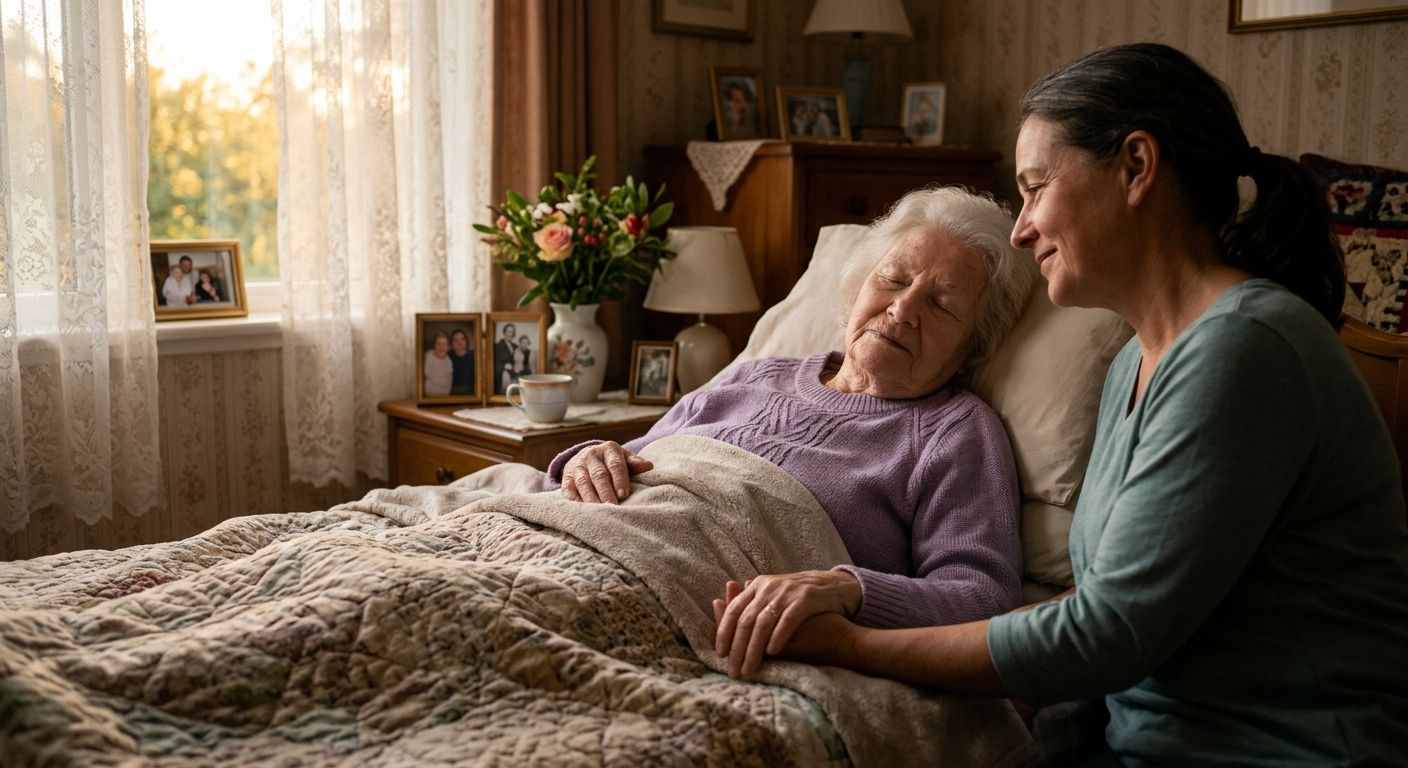
Table of Contents
- Understanding the Dying Process and the Power of Letting Go
- Preparing Yourself to Support a Loved One Through Their Final Transition
- Step 1: Recognize Why a Dying Person May Reach Out
- Step 2: Create a Serene Home Environment for Letting Go
- Step 3: Adapt Support in Hospital or Care Facility Settings
- Step 4: Use Compassionate Words When Talking to Someone Dying
- Step 5: Encourage Letting Go with Gentle Reassurance and Permission
- Step 6: Support the Whole Family During the Final Days
- Step 7: Involve Professional Hospice Care for Comprehensive Support
- Navigating Common Challenges When a Loved One Won’t Let Go
- Finding Peace with Amara Hospice Care in Saginaw and Greater Detroit
Understanding the Dying Process and the Power of Letting Go
Learning how to help a dying person let go involves creating a safe place where he or she may practice forgiveness, gratitude and love, with the help of professional hospice staff who manage the pain. While there is always a uniqueness to the way people die, dying is something we all experience as part of our lives rather than a failure on behalf of medicine. That knowledge helps patients and family members manage fears associated with death. Emotional and spiritual letting go is sometimes referred to as "letting go" and can leave one in great peace. Open lines of communication will assist people as they say things such as "Please forgive me," "I forgive you," "Thank you" and "I love you," phrases the Advancing Expert Care community has offered up to help relieve any last regrets or unresolved issues. For the nurses at Amara Hospice Care, comprehensive nursing, pain management and emotional support lay the foundation, enabling a patient’s family to focus on what matters most instead of trying to meet a long list of demands. Having learned the emotional landscape before death, you can help those in need to be there to give comfort during its end times.
Key Takeaways
- Getting ready emotionally for death can be the first act of love we offer when walking alongside a loved one in their final days.
- This quiet atmosphere can help him/her feel safe enough to release emotional burdens.
- It’s obvious that hospitals can be intimidating places, yet minor adjustments can make for a calmer environment.
- After adapting the physical environment and daily rhythms of the care setting, the next layer of support comes through the words we choose.
- Learning to aid a dying person in letting go begins with offering gentle reassurance and explicit permission, alongside giving encouragement by being understanding.
Preparing Yourself to Support a Loved One Through Their Final Transition
Getting ready emotionally for death can be the first act of love we offer when walking alongside a loved one in their final days. When we have taken some time out to find our own centering space then we can be calm enough to witness someone else in their process.
A few basic heart-felt statements like ‘forgive me’, ‘Thank you’ and ‘I love you’ can facilitate deep closure. Asking the patient to talk about his/her proudest moments in life, advice he/she could offer to his/her generation and some favorite memory of his/her childhood may trigger a life review and validate her/his contribution on the planet. Setting some quiet time without interruptions for the loved one and open body language may tell him/her that here he/she does not need to worry as the person will listen to anything from him/her. Finally, we may invite them to resolve old grievances by inviting expression of genuine feelings and thoughts.
When we do this without urgency or direction, when we sit patiently and simply try to hear what a dying person needs to say, then we can be companions who understand the subtlest signs that another may send before he passes into death. This quiet companionship, ready to hear what they need to say, is a mission of grace in their final transition.
When a loved one near the end of life reaches out for a deeper conversation, it often signals a need for emotional closure and connection, and as end-of-life doula Adrian Allotey shares on the Advancing Expert Care blog, these moments are invitations to offer mercy and kindness. They could be asking for or extending forgiveness in order to make amends over any old grudges. Or, they might simply want to say “thank you” for shared experiences and support, expressing gratitude that has long gone unspoken. A life review—sharing proud memories and personal stories—allows them to feel recognized as a whole person rather than a patient. Saying or hearing ‘I love you’ strengthens bonds when time is precious. By recognizing these underlying needs, we can begin to create a calm, supportive space at home where they feel safe to speak from the heart.
Step 2: Create a Serene Home Environment for Letting Go
This quiet atmosphere can help him/her feel safe enough to release emotional burdens. For this reason, putting his/her treasured belongings around – e.g., a photograph, a well-worn keepsake – in the dying loved one’s line of sight grounds them in beloved memories and reinforces their sense of identity.
From Adrian Allotey: Use simple phrases such as ‘Forgive me,’ ‘Thank you’ and ‘I love you’ to provide closure. Ask open-ended questions about what they want others to know — such as ‘What are you most proud of.’ or ‘What advice would you like to leave behind.’ — in order to recognize them fully and not just for their disease.
The Amara Difference at Amara Hospice Care is that we honor people for who they were as individuals during their last days on earth, with intentionality and with compassion. So when a loved one transitions to a hospital or care facility, the environment shifts, and we adapt our approach. We talk about this next.
Step 3: Adapt Support in Hospital or Care Facility Settings
It’s obvious that hospitals can be intimidating places, yet minor adjustments can make for a calmer environment.
Put in simple items like a favorite blanket or family pictures, or play music they enjoy listening to that helps them retain who they are and puts them at ease.
Hospice services can begin while a patient is still in the facility. CMS guidelines confirm that the same six-month life expectancy certification applies regardless of location, so our team can collaborate with facility staff on pain management and emotional support. By working closely with nurses and aides, we help ensure that comfort measures are consistent and that the patient’s emotional and spiritual needs are met alongside medical care. Even in a busy hospital environment, families can work with us to carve out moments of peace and connection.
Once we’ve established that our physical space as well as our mental state feel secure and safe, our words can become tools of consolation.
Step 4: Use Compassionate Words When Talking to Someone Dying
After adapting the physical environment and daily rhythms of the care setting, the next layer of support comes through the words we choose. We can offer phrases that bring closure and express love. Saying “Please forgive me” or “I forgive you” can release long-held guilt, as a community blog notes. “Thank you” and “I love you” honor the gratitude and connection at the heart of the relationship. A simple question like “What memory are you most proud of?” invites a life review, helping the person see the richness of their story. These words are not a script; we speak from the heart, adapting each phrase to the person’s energy and our unique bond. Real People. Real Stories. These are the words that can heal and linger. Once we speak these compassionate words, we often feel a natural movement toward gently offering permission to let go.
Step 5: Encourage Letting Go with Gentle Reassurance and Permission
Learning to aid a dying person in letting go begins with offering gentle reassurance and explicit permission, alongside giving encouragement by being understanding. This reassurance helps the individual feel they are not burdening others and can let go of feelings of remorse or anxiety.
We could instruct our beloveds to say those critical closure statements that Advancing Expert Care has taught us to emphasize, such as please forgive me, I forgive you, thank you, and i love you. To speak these words allows all emotional stuff to settle down. We add into this mix a statement from the heart like It’s safe to let go, we’ll look after each other. This last one specifically allows them to leave without fear.
Permission can be received from them as well, bringing about quite a visible lightening up. Once given their permission, we then naturally focus on trying to comfort the whole family at that last moment in time for each individual.
Step 6: Support the Whole Family During the Final Days
As your loved one begins to find peace, the family’s emotional journey continues—and learning how to help the family of a dying person is crucial. We can support one another through active listening, patience, and simply being present. Creating a calm environment allows everyone to share memories and feelings without judgment. End-of-life care experts say small but powerful actions can make a profound difference.
“I forgive you”, “Please forgive me.” “Thank you”, “I love you”. Such simple expressions have the power to heal wounds from the past, and cement our relationships in the present. Gently prompting them to tell us about their most memorable times, life lessons learned along the way, or cherished stories from childhood is also an act of love, because these memories honor them. These kinds of discussions provide comfort and closure to those left behind. The hospice care team at Amara Hospice Care walks alongside families through each and every moment – body and soul.
Step 7: Involve Professional Hospice Care for Comprehensive Support
When a loved one is approaching the end of life, involving professional hospice care ensures they receive comprehensive comfort and that family caregivers are not left to manage alone. Eligibility for hospice is determined by a physician’s certification that the patient has a life expectancy of six months or less if the terminal illness follows its normal course, in accordance with Medicare criteria. Once enrolled, we create an individualized, culturally sensitive care plan that honors the patient’s unique needs and goals. Our entire team—physicians, nurses, certified aides, social workers, chaplains, and trained volunteers—works together to deliver caring and compassionate hospice services, including expert pain and symptom management, emotional and spiritual support, massage and music therapy, and 24/7 on-call help. Even with this full spectrum of support, families may encounter difficult emotional moments, especially when a loved one appears to struggle with letting go, which is something we navigate together.
Navigating Common Challenges When a Loved One Won’t Let Go
Family members at a loss when they can’t help a loved one to let go as the end-of-life approaches. While their loved one’s body declines physically, many people still have strong emotional and even spiritual attachments to the physical world. It takes time and gentleness to allow these to shift gently away. At Amara Hospice Care, we witness this daily, believing that it is possible to offer care in the form of mindful conversation that allows people to begin the process of letting go.
End-of-life doula Adrian Allotey writes that she weaves in four simple yet powerful phrases at those final moments: "Please forgive me," "I forgive you," "Thank you" and "I love you." "But there isn’t always time for more," she explains. "Beyond those four simple phrases, however, if you ask them questions such as what their proudest moments were, how they want to be remembered or what advice they have for someone else who’s dying, it allows the dying to see themselves again in their wholeness rather than in pieces, like sick bodies or broken spirits." The Centers for Medicare & Medicaid Services bases hospice eligibility on a doctor-certified prognosis of only six months left to live. But emotional readyness moves to the next phase on its own timetable, which no calendar will speed up.
Nurses, social workers, and chaplains from Saginaw County as well as in the Greater Detroit area are all skilled at providing space for forgiveness, gratitude and for what matters most. With this equipment, healing is achievable. We are there beside you every inch of the way.

Frequently Asked Questions
Why does a dying person reach out
A dying person reaches out to find emotional closure and connection. They may need to ask for or offer forgiveness, express gratitude, share proud memories, or say ‘I love you,’ as end-of-life doula Adrian Allotey explains. These conversations help them feel recognized as a whole person rather than just a patient and provide an opportunity to resolve old grievances and strengthen bonds.
How to help a dying person let go at home
To help a dying person let go at home, create a serene environment with treasured belongings like photos and keepsakes in their line of sight. Use closure phrases such as ‘Please forgive me,’ ‘I forgive you,’ ‘Thank you,’ and ‘I love you.’ Ask open-ended questions about their proudest moments or advice they want to leave, and offer gentle reassurance that it is safe to let go.
How to help a dying person let go in hospital
In a hospital, help a dying person let go by adapting the environment: bring a favorite blanket, family pictures, or play music they enjoy. Hospice services can start in the facility, with teams collaborating on pain management and emotional support. Families can work with hospice staff to carve out moments of peace and connection, using closure phrases and reassurance.
What to say to someone dying of cancer
When speaking to someone dying of cancer, use compassionate phrases like ‘Please forgive me,’ ‘I forgive you,’ ‘Thank you,’ and ‘I love you’ to offer closure. Ask questions such as ‘What memory are you most proud of?’ or ‘What advice would you like to leave?’ to invite a life review and honor their identity beyond the illness.
Finding Peace with Amara Hospice Care in Saginaw and Greater Detroit
If you are searching for how to help a dying person let go, we want you to know you are not alone. A community resource highlights that gentle phrases like ‘please forgive me,’ ‘thank you,’ and ‘I love you,’ along with life-review questions about proud moments and personal advice, can offer profound emotional closure.
Our team at Amara Hospice Care provides comprehensive, 24/7 support in Saginaw and in Greater Detroit. From nursing and pain management to massage and music therapy, we tailor our services to comfort and dignity. With offices at 3085 Bay Rd #3 in Saginaw and 25899 W 12 Mile Rd in Southfield, we’re nearby. Eligibility for hospice requires a physician’s certification of a prognosis of six months or less; care plans are individualized and outcomes vary. Medicare and insurance documentation may apply.
Call us at 989.200.5000 or send an e-mail to info@amarahospicemi.com if you would like us to give you a free, no-obligation evaluation on what services might be appropriate for your family member.
Request Your Free Assessment
You’ve learned powerful ways to help a dying person let go, from creating a serene environment to using compassionate words and gentle reassurance. These steps can bring peace, but professional hospice care provides the comprehensive support that makes this journey easier for both patient and family. Amara Hospice Care in Saginaw and Greater Detroit offers a team of doctors, nurses, social workers, and chaplains dedicated to comfort and dignity. With 24/7 on-call availability, they are there whenever you need them. A free assessment will help you understand eligibility and how their services can be tailored to your unique situation. Taking this step allows you to focus on the moments that matter most while experts manage pain and provide emotional guidance. Reach out today to start the conversation.
Resources