Table of Contents Can the Dying Process Be Reversed? Understanding Hospice and End-of-Life Care The Dying Process Explained: Phases, Signs, and What to Expect Medical Perspectives on the Dying Process: Palliative Care vs. Reversibility Comparing Palliative and Hospice Care The Biological Reality of Dying: Can It Truly Reverse? When Hospice Admission Brings Stability: Understanding the …

Table of Contents
- Can the Dying Process Be Reversed? Understanding Hospice and End-of-Life Care
- The Dying Process Explained: Phases, Signs, and What to Expect
- Medical Perspectives on the Dying Process: Palliative Care vs. Reversibility
- How Hospice Supports Quality of Life During Stabilization and Beyond
- Debunking Myths About Reversing the Dying Process: Facts and Care Options
- Frequently Asked Questions About Hospice and End-of-Life Care
- Embracing Compassionate Care: The Role of Amara Hospice in End-of-Life Journeys
Can the Dying Process Be Reversed? Understanding Hospice and End-of-Life Care
When families ask, “Can the dying process be reversed?” the straightforward answer is no, death is a natural, irreversible progression. Hospice care, however, shifts the aim from cure to comfort, embracing the final chapter with dignity and grace. At Amara Hospice Care, we walk alongside families in these sacred weeks, ensuring that comfort and compassion remain the focus.
The dying process has its own phases — and if we know what they’ll be like, the fear eases. In the first stage, known as pre-active, a patient may start pulling away from social contact and stop eating. The second stage is called active. At this point patients tend to have less movement, deeper sleeps, and more irregularities in their breathing patterns. Throughout all those phases, hearing is usually the last sense left. Continue speaking gently, playing any music he might have enjoyed during life, and keep offering your love and comfort until there’s nothing in return.
At Amara Hospice Care, our multidisciplinary team, including nurses, pain management specialists, massage and music therapists, bereavement counselors, social workers, and chaplains — provides compassionate care around the clock. We design individualized, culturally sensitive care plans that address medical, emotional, and spiritual needs, nurturing both body and soul. With 24/7 on-call support, families never have to navigate these moments alone, and our bereavement services continue to walk alongside them long after the final goodbye.
Realizing there are identifiable stages that the dying process proceeds through can assist families in feeling much more prepared for what lies ahead.
Key Takeaways
- Although the process of dying varies from one individual to another, there often exists a sequence that is natural and irreversible.
- Modern hospice medicine recognizes that the dying process follows an irreversible physiological cascade, distinct from conditions that can be treated or cured.
- The belief that the dying process can somehow be reversed is one of the most persistent and distressing myths families encounter when a loved one approaches the end of life.
- Because the natural dying process cannot be reversed, families often have practical questions about the signs and comfort measures that signal the end of life.
- While the question of whether the dying process can be reversed often arises, we focus on comfort through a natural progression.
The Dying Process Explained: Phases, Signs, and What to Expect
Although the process of dying varies from one individual to another, there often exists a sequence that is natural and irreversible. We can recognize this and offer comfort as family members. We cannot chase what we know will not occur.
For many families wondering just how long their loved one might live for before dying, Hospice Palliative Care Ontario says that in general this will break down as two weeks of pre-active phase followed by about three days in what we call ‘active phase’. The reason these periods aren’t set-in-stone times is that everyone’s body goes at their own pace.
Here’s how the two phases look compared against what we normally see in each phase:
| Phase | Duration | Key Signs | Patient Experience |
|---|---|---|---|
| Pre-Active | Approximately 2 weeks | Decreased appetite, increased withdrawal, longer periods of sleep, possible hallucinations or visions of deceased individuals, intermittent apnea | Hearing remains; caregivers should speak calmly; focus on comfort and emotional presence |
| Active | Approximately 3 days | Coma or semi-coma states, dramatic changes in respiratory patterns, rattling breath from secretions, skin mottling or discoloration, decreased organ function, physical rigidity or jaw drop | Hearing likely still present; avoid forcing fluids or food; reposition every 1–2 hours; professional assistance recommended when pain becomes unmanageable |
Appetite fades, sleep becomes deeper, and they might talk about their loved ones who have already passed. They reflect the body conserving energy and the mind processing transition in its own way.
As active-phase progresses, breathing pattern changes. Prolonged apneas, pauses between breaths, may last long enough to cause alarm, though they rarely disturb the person who is dying. When secretions accumulate in the back of the throat, that’s what creates the so-called “death rattle,” which most often makes families more nervous than anyone else. Oral moisturizing and repositioning can ease it. As mottling starts to show, it appears as purplish, lace-like discoloration on the skin, usually beginning in the feet or hands, indicating that circulation is drawing inward.
It’s normally said that hearing lasts up until the last stage, so families should keep speaking to their loved one in a gentle, reassuring tone. Do not try to push any sort of meals or drink on them, the body no longer needs them, and doing so can cause discomfort. Advance care planning offers guidance and peace when decisions feel heavy.
It can be much easier to support someone as they go through this process if we know about each phase and its signs. Instead of thinking that something needs to be fixed, we just need to provide some comfort and dignity. That’s the goal of both Palliative Care and Hospice.
Medical Perspectives on the Dying Process: Palliative Care vs. Reversibility
Modern hospice medicine recognizes that the dying process follows an irreversible physiological cascade, distinct from conditions that can be treated or cured. This distinction helps families understand what to expect and how to best provide comfort at life’s end.
Comparing Palliative and Hospice Care
Palliative care and hospice care share a common commitment to relieving suffering, yet they differ in timing, goals, and settings. Palliative care can begin at any stage of a serious illness and is often provided alongside curative treatments such as chemotherapy or surgery. Its goal is to manage symptoms—pain, nausea, shortness of breath—so that the patient can continue pursuing disease-directed therapies with a better quality of life. Hospice care, by contrast, is designed for individuals whose life expectancy is measured in months rather than years and who have decided to stop curative interventions. In hospice, we focus entirely on comfort and dignity, using a multidisciplinary team that includes nurses, aides, social workers, and chaplains to manage pain, ease anxiety, and provide 24/7 support for both the patient and the family. While palliative care can flow into hospice as a disease progresses, the hospice philosophy accepts that the underlying condition will not be reversed and that the priority is a peaceful, pain-free final chapter.
The Biological Reality of Dying: Can It Truly Reverse?
Hospice Palliative Care Ontario (HPCO) outlines the dying process in two recognizable phases. The pre-active phase typically spans about two weeks and is marked by increased withdrawal, periods of apnea (temporary pauses in breathing), reduced intake of food and fluids, and sometimes visions of deceased loved ones. As the person enters the active phase, which usually lasts around three days, the body undergoes more dramatic changes: breathing patterns become irregular with a wet, rattling sound, skin mottling appears as circulation slows, and organ function gradually ceases. Families often wonder whether the dying process can be reversed, but these physical signs reflect a natural progression that modern medicine cannot halt. The body’s essential systems—circulation, respiration, organ function—can no longer sustain life, making reversal an unrealistic expectation. Within this process, hearing is often the last sense to fade; continuing to speak softly, play familiar music, or share memories can still connect with the person. Force-feeding fluids is discouraged because a weakened swallow reflex can cause choking; instead, oral moisturizing with damp swabs offers comfort without risk.
When Hospice Admission Brings Stability: Understanding the Transition
Many caregivers observe that a person’s condition appears to stabilize after hospice enrollment, even as the underlying disease continues its course. This perceived stability arises from expert symptom control: a hospice team uses tailored medications and positioning to ease labored breathing, calm agitation, and relieve pain. While the physiological decline remains irreversible, managing distress often allows the person to rest more peacefully and can give families a window of calm connection. It is important not to mistake this stabilization for reversal; the body’s functions are still closing down, but the environment of attentive care can create precious moments of lucidity and emotional closeness. Careful repositioning every one to two hours, as recommended by that organization, protects fragile skin and prevents pressure injuries. The presence of a dedicated hospice team available 24/7 gives families reassurance, which can reduce anxiety and contribute to that feeling of stability. Ultimately, while the dying process itself is irreversible, compassionate hospice care can create a period of physical and emotional stability that supports quality of life.
How Hospice Supports Quality of Life During Stabilization and Beyond
During these moments, hospice care shifts its focus entirely to sustaining comfort, dignity, and meaningful connection, recognizing that while the body’s natural trajectory continues, the experience can still be filled with compassionate presence and expert symptom management.
Amara Hospice Care’s Multidisciplinary Approach to Comfort
When a person enters the pre-active phase of dying—typically a period of about two weeks, according to caregiver guidance—they may experience increased withdrawal, intermittent pauses in breathing, and a reduced interest in food and fluids. Some may even describe visions of loved ones who have passed. These changes can be deeply unsettling, yet they are a normal part of the transition. Our team at Amara Hospice Care surrounds each patient with a coordinated network of professionals who specialize in comfort during these exact moments. Registered nurses monitor respiratory patterns and adjust pain management strategies, while certified aides provide gentle repositioning every one to two hours to prevent skin breakdown and promote ease. Massage and music therapists offer soothing touch and familiar melodies that can calm agitation and create a serene environment.
Practical Steps When a Loved One’s Condition Stabilizes
Seeing someone cycle between consciousness and fleeting moments of awareness may be disturbing but as a family member you have this time to be fully engaged. Because the end stages of dying cannot be reversed, the quiet period which usually precedes the active phases gives a rare moment when we can be truly present. During hospice palliative care, it’s especially important for a family member to be there to talk or sing to their loved one because it has been found that hearing is usually the final sense to disappear, although many times the person does not respond at all. But know that your words still get to him. On another front, our teams educate patients’ loved ones about watching for signs of pain or distress in their family members, including frown lines or restlessness, urging that these be reported immediately so that our 24/7 on-call nurses can spring into action. Should a patient’s breathing become irregular or they appear unable to take medications, the care plan is immediately adjusted. Our teams teach caregivers how to recognize when the emotional and physical demands have become overwhelming, prompting them to make a call should more hands-on care or reassurance become necessary.
The Role of Family Support and Bereavement Services
This type of hospice care does include everyone surrounding a dying person as well. This particular period of dying may last about three days and during this time many things can happen that leave family members feeling powerless. Coma-like states, dramatic respiratory patterns, and stiffening of the jaw can occur. During these intense hours, our chaplains and social workers provide continuous emotional and spiritual care, sitting with families, facilitating legacy conversations, and helping them find meaning even in the hardest moments. Our bereavement services continue after the loss, offering grief counseling, support groups, and check-in calls that help families move through mourning without feeling abandoned. The Amara Difference is also visible in the relationship’s longevity. We remain a resource for coping strategies and a compassionate listener long after the formal caregiving role has ended. We walk them through all stages of the dying process, from the first sign of decline to the months following the death. With this knowledge, it is easy to tell which myths prevail over the realities about being able to reverse dying.
Debunking Myths About Reversing the Dying Process: Facts and Care Options
The belief that the dying process can somehow be reversed is one of the most persistent and distressing myths families encounter when a loved one approaches the end of life. In reality, dying is a natural, irreversible progression that the body begins to navigate through predictable stages.
The pre-active phase spans two weeks and brings increased withdrawal from social interaction, periods of apnea where breathing pauses, reduced intake of food and fluids, and sometimes visions of deceased relatives or friends. The active phase that follows lasts roughly three days, during which the person may enter a coma or semi-coma state, breathing patterns become irregular with a characteristic rattling sound, and skin begins to show mottling as circulation slows. Despite the person appearing unresponsive during these final days, hearing is often the last sense to fade, and caregivers are encouraged to continue speaking softly, sharing memories, or reading aloud.
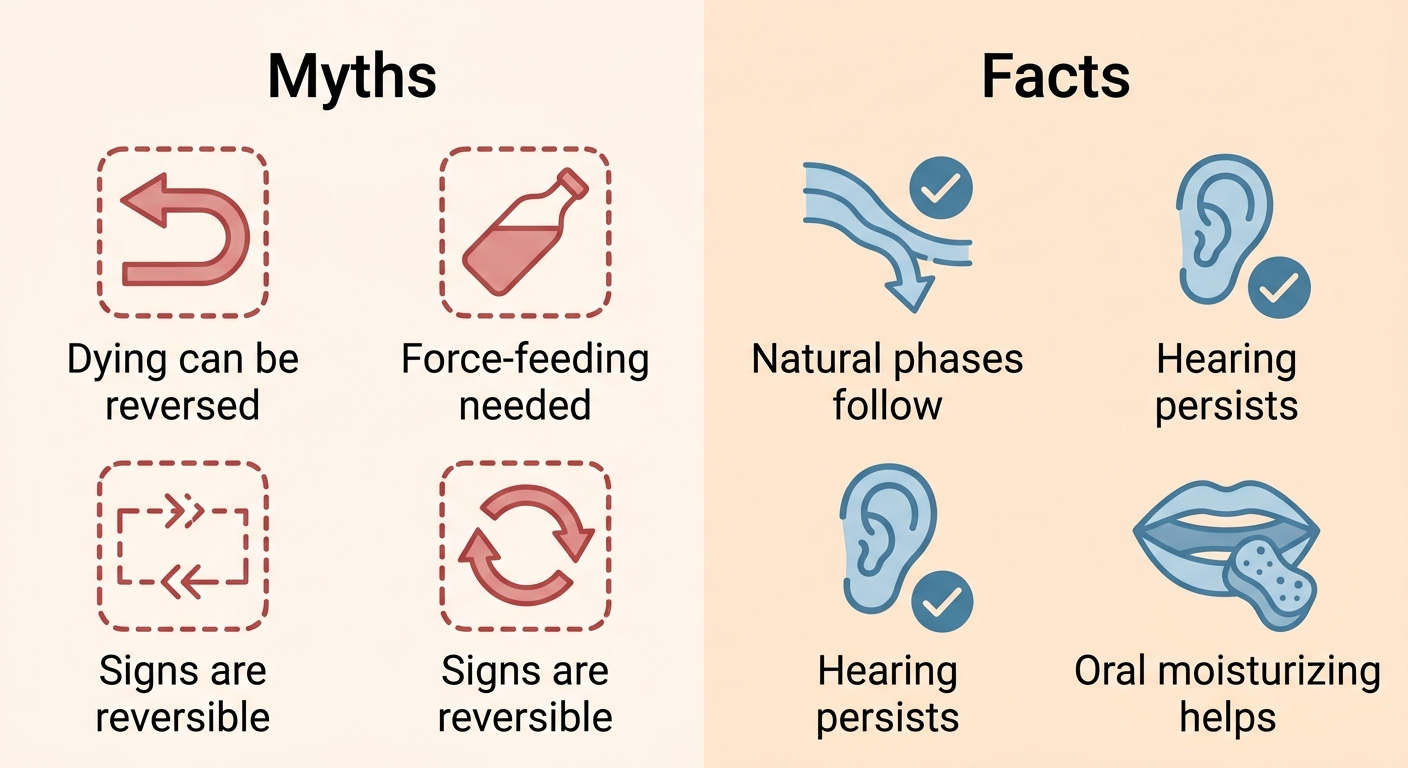
One particularly harmful myth is that offering food and water by mouth becomes essential as intake declines. That guidance clarifies that when swallowing becomes difficult, force-feeding fluids can actually trigger choking episodes that cause distress and aspiration. Instead, we focus on oral moisturizing — gently swabbing the mouth, lips, and tongue with moistened sponges or applying a light balm — which relieves dryness without risk.
When families let go of the idea of reversing the dying process, they create space for hospice care, a philosophy centered entirely on comfort, dignity, and symptom control during the final chapter of life. Amara Hospice Care walks alongside families through the pre-active and active phases, offering expert pain management, emotional and spiritual support, and practical guidance.
These facts lead us to wonder what our loved ones will want from us during their last few months in life as well as what they might say if asked the tough question “what should we do now.”
Frequently Asked Questions About Hospice and End-of-Life Care
Because the natural dying process cannot be reversed, families often have practical questions about the signs and comfort measures that signal the end of life.
- What should I expect as the end of life approaches? According to that organization, the dying process includes a pre-active phase of about two weeks and an active phase of roughly three days. Hearing is often the last sense to diminish, so speaking gently and playing familiar music can bring comfort.
- When should I consider hospice care and how do I get started? When treatments are no longer effective, hospice care focuses on comfort and dignity. At Amara Hospice Care, we bring Real People. Real Stories. to every family we serve. Request a no-cost assessment by calling us to learn how we can support your family.
Frequently Asked Questions
Is the dying process considered a reversible medical event?
No, the dying process is not considered a reversible medical event. It is a natural, irreversible progression. According to Hospice Palliative Care Ontario, the pre-active and active phases—lasting about two weeks and three days—reflect a physiological cascade where organ function ceases and essential systems can no longer sustain life, making reversal impossible.
What is the difference between palliative care and reversing the dying process?
Palliative care manages symptoms and can be provided alongside curative treatments at any stage of a serious illness. Reversing the dying process, however, is not a medical option; modern medicine views dying as an irreversible physiological cascade. While palliative care works to improve quality of life during treatment, it does not aim to reverse the natural end-of-life progression.
How can hospice support a patient’s quality of life if their condition stabilizes?
When a patient’s condition stabilizes, hospice supports quality of life through expert symptom control, pain management, and a multidisciplinary team. Massage, music therapy, and repositioning every one to two hours promote comfort. Chaplains and social workers offer emotional and spiritual care, and the 24/7 on-call team adjusts the care plan, ensuring dignity and meaningful connection during the calm.
Embracing Compassionate Care: The Role of Amara Hospice in End-of-Life Journeys
While the question of whether the dying process can be reversed often arises, we focus on comfort through a natural progression. The pre-active phase lasts about two weeks and the active phase about three days. Hearing is often the last sense to fade, so gentle speech and oral moisturizing offer comfort without force-feeding fluids.
Through nursing, pain management, music therapy, and bereavement support, we help families navigate with dignity. Hospice care is available when hospice eligibility has been established by a doctor and varies. Insurance and Medicare coverage conditions may also apply.
Request a Free Hospice Assessment
This guide has clarified that the dying process is a natural, irreversible progression, but hospice care provides comfort and dignity every step of the way. Now that you understand the phases of dying and the importance of hearing and presence, you may be ready to explore how professional support can benefit your family. Amara Hospice Care offers a multidisciplinary team including doctors, nurses, social workers, and chaplains who focus on holistic well-being. They provide care throughout Saginaw County and the greater Detroit area, ensuring help is close at hand when you need it. A free assessment can help determine if hospice is right for your loved one’s specific situation and align with their needs for pain management, emotional support, and daily comfort. To take the next step toward compassionate care, request a free hospice assessment today.
Request a Free Hospice Assessment
Resources