Table of Contents Understanding Shock and Grief Following a Loss Before You Begin: Key Considerations for Supporting Someone in Shock Step 1: Recognize the Signs of Shock After a Sudden Death Step 2: Offer Emotional Support During Numbness Step 3: Provide Practical Help to Stabilize the Grieving Person Step 4: Communicate Gently with Someone Who …

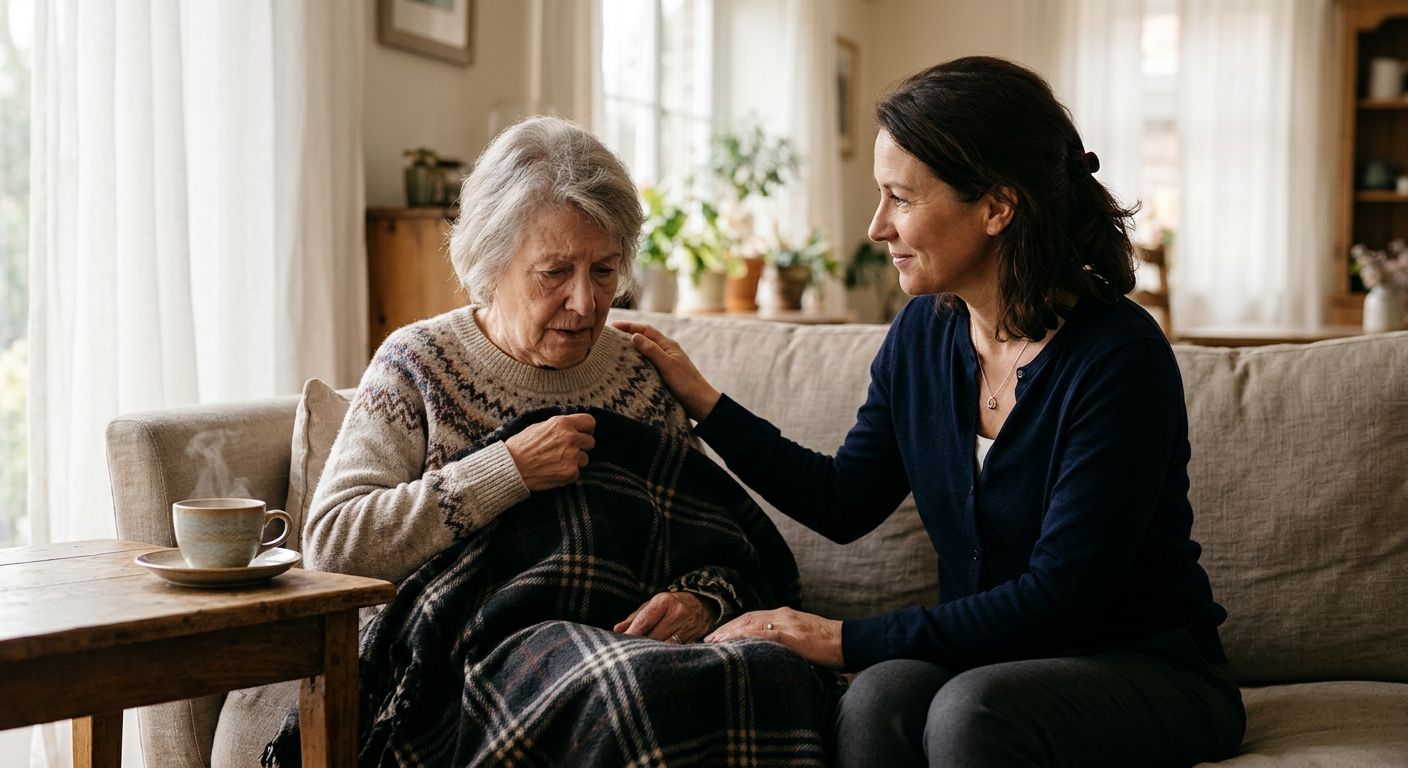
Table of Contents
- Understanding Shock and Grief Following a Loss
- Before You Begin: Key Considerations for Supporting Someone in Shock
- Step 1: Recognize the Signs of Shock After a Sudden Death
- Step 2: Offer Emotional Support During Numbness
- Step 3: Provide Practical Help to Stabilize the Grieving Person
- Step 4: Communicate Gently with Someone Who Feels Disconnected
Understanding Shock and Grief Following a Loss
Understanding how to help someone in shock after a death begins with recognizing that shock, disbelief, and emotional numbness are natural responses, according to the Centers for Disease Control and Prevention (CDC). Grief can bring a wave of intense emotions, sadness, confusion, anxiety, and may affect appetite, sleep, and energy levels. This is the mind’s way of processing an immense loss.
Making simple daily routines can help you feel grounded if everything feels unsettled. Relying on support from family members, good friends, or a faith community, and making specific offers of help ("I’ll bring dinner Tuesday") rather than vague gestures, is recommended by the CDC. Professional grief counseling is also a valuable resource.
We walk beside each other at Amara Hospice Care throughout the bereavement services for patients and their families. Acknowledging our own emotions is the first step toward providing compassionate care, and with thoughtful preparation, that support can be truly meaningful.
Key Takeaways
- Helping a person in shock after a death is a mission of grace, one that calls for patience, not perfection.
- If someone has been in shock over losing something unexpectedly, the symptoms like being out of touch and feeling emotionally numb may be too much to bear.
- When learning how to help someone in shock after a death, you’ll notice that after the initial shock, your loved one may slip into emotional numbness.
- If you want to be there for people who have recently experienced a loss in their life we’d recommend offering something rather than telling them to decide what they would want you to do.
- When learning how to help someone in shock after a death, focusing on gentle communication ensures that any support we offer feels safe and validating.
Before You Begin: Key Considerations for Supporting Someone in Shock
Helping a person in shock after a death is a mission of grace, one that calls for patience, not perfection. Before we step in, a few quiet considerations can make our support more genuine and less overwhelming for both of us.
While we hold space for the grieving person, it’s equally important to draw strength from our own circle—trusted friends, family, a faith community, or a grief counselor. According to the CDC, leaning on these resources keeps us steady so that we can offer compassionate, sustainable support.
Grieving isn’t like going up the stairs on a staircase with known steps. Public health guidance notes that everyone’s journey is different. There aren’t any specific time limits involved, and we don’t need to expect people to go through certain steps at certain times; instead, meet them as they are when they get to us.
Instead of saying “Let me know if there’s anything,” which feels a little too much, provide something specific, like bring over dinner, take her to see the doctor or just check in on her at some point that day. Doing these little things can serve as an anchor for someone who feels out of control. Keep a normal daily schedule – like make tea each morning, go out for five minutes’ stroll – whatever it may look like to them.
With these thoughts in mind, our next task is to learn how to spot the warning signs of shock so that when they appear we can respond to them with cool compassion.
Step 1: Recognize the Signs of Shock After a Sudden Death
If someone has been in shock over losing something unexpectedly, the symptoms like being out of touch and feeling emotionally numb may be too much to bear. But that’s completely okay. What we’ve already done gives people something they need to have when these emotions pop up, instead of freaking out about how awful it all is.
Guidance says that how we experience shock in the wake of death can be quite different for each individual; some find themselves dazed, confused or even frozen; meanwhile, some have trouble focusing on what’s going on around them, let alone accepting that what happened really did happen.
Common signs include:
- Persistent disbelief
- Difficulty concentrating or making decisions
- A sense of emotional numbness or detachment
Those aren’t symptoms that indicate weakness. They’re actually the body’s response as it starts to heal.
Once we’ve identified that shock is present, the logical next step is to begin offering gentle emotional support to the patient as they move into the stillness of emotional numbness.
Step 2: Offer Emotional Support During Numbness
When learning how to help someone in shock after a death, you’ll notice that after the initial shock, your loved one may slip into emotional numbness. Steady, gentle presence matters more than words. We know that sitting with the grieving person without pressuring them to talk can be comforting. Let them set the pace. Guidance reminds us that grief is not a straight line, and numbness can ebb and flow.
Don’t try to make them feel better. Don’t say ‘you should be feeling better’. Instead say ‘I’m here with you.’Offer to make a meal. Help out with little chores around the house. Encourage them to get up; suggest a short walk if they’re capable. Encourage them to get some food if they want. It can help restore a sense of stability.
If numbness persists, professional grief counseling – including bereavement services provided by hospice organizations – might be the appropriate choice. While emotional support is vital in stabilizing your loved one’s condition, there may also be other forms of assistance necessary as well.
Step 3: Provide Practical Help to Stabilize the Grieving Person
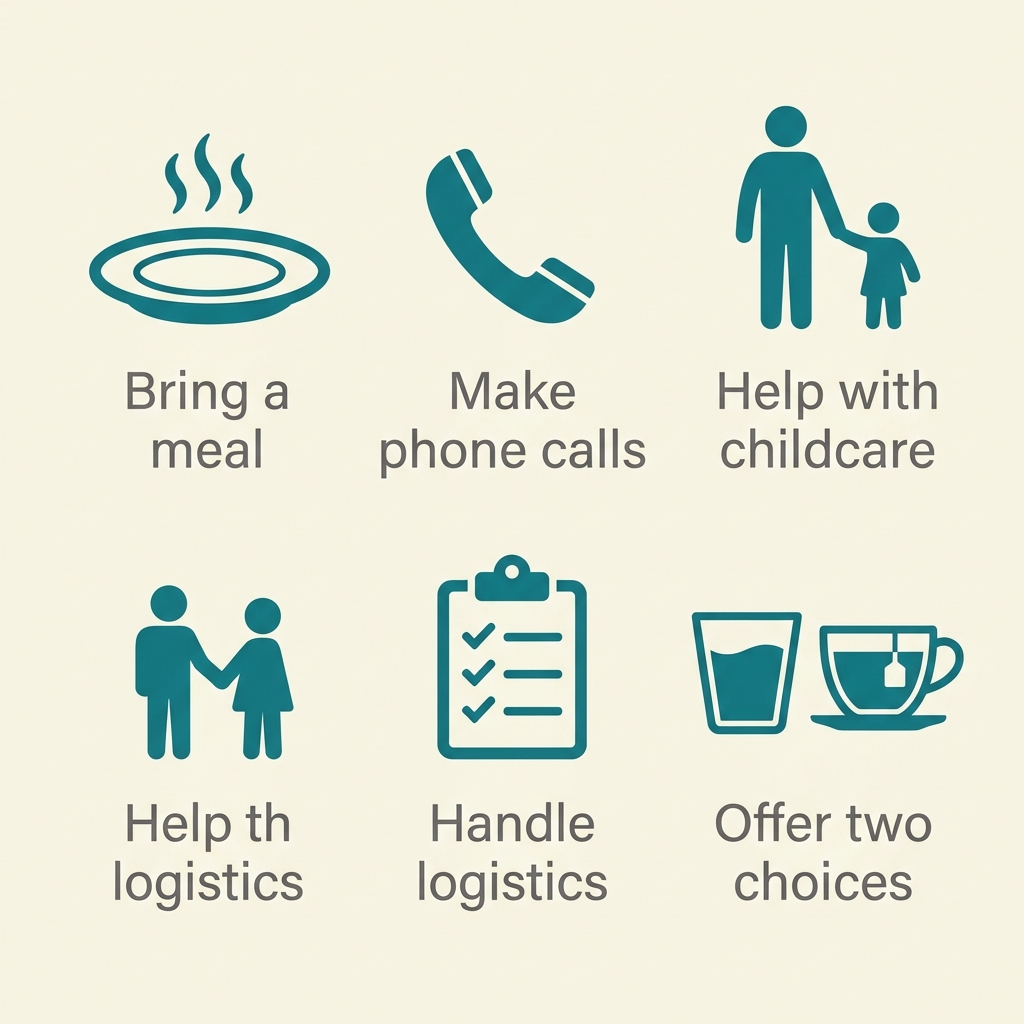
If you want to be there for people who have recently experienced a loss in their life we’d recommend offering something rather than telling them to decide what they would want you to do.
- Offer concrete tasks — bring a meal; the CDC notes specific help is more effective.
- Help establish a daily routine — regular mealtimes or a short walk.
- Suggest a small ritual to honor their loved one.
- Encourage self-care: nutrition, rest, and light activity support emotional stability, per CDC.
- Watch for prolonged sadness: if intense sadness lasts two weeks or more and disrupts daily life, CDC recommends professional evaluation. Bereavement counseling through hospice programs can help.
With things calming down, now is a good time for gentle conversation that lets them talk about what happened.
Step 4: Communicate Gently with Someone Who Feels Disconnected
When learning how to help someone in shock after a death, focusing on gentle communication ensures that any support we offer feels safe and validating. We can replace vague statements like “let me know if you need anything” with specific, actionable offers, such as bringing a meal or sitting with them during a difficult phone call. Guidance also reminds us that grief is personal and doesn’t follow a set timeline; what a person feels, whether numbness, anger, or sadness, is normal. This validation helps them feel seen rather than judged. Encouraging simple daily routines, such as a quiet walk or a consistent bedtime, can create a gentle anchor, as guidance notes. We also help when we gently suggest they lean on trusted friends, family, faith communities, or a professional grief counselor for extra support.
It also means that the individual feels as if he has been listened to, thus encouraging the shock stage to develop more fully in its own good time.
Step 5: Understand the Duration of Shock After a Death
Following a death, shock often shows up as disbelief and emotional numbness. Its timetable differs in each case. We get asked frequently how long shock lasts after a death. Guidance notes that grief is an individual, non-linear process, so shock may come and go; people can return to numbness even after believing they have moved forward.
Offer concrete, practical help instead of vague, general offers. Rather than simply telling someone you will be available when he needs something, make food, help with housework and errands or do things that involve minimal decision-making. Encourage him to lean on trusted friends, family, or faith communities for support, and develop some simple rituals and practices like eating regularly and taking short walks, which can become anchor points of order for the day.
If shock is overwhelming a beloved person’s ability to function, professional bereavement counseling can provide additional structured support.
Step 6: Encourage Professional Bereavement Counseling
Part of knowing how to help someone in shock after a death is recognizing when the initial numbness deepens into a more serious condition. Guidance advises that if sadness, hopelessness, or loss of interest in daily activities persists for two weeks or longer and interferes with everyday function, it may signal clinical depression. These signs, outlined by the CDC, separate typical grief from depression. Knowing this guideline helps caregivers identify when grief has become something that needs clinical attention.
We encourage anyone noticing these patterns in themselves or a loved one to seek professional bereavement counseling. At Amara Hospice Care, we care for body and soul, which is why our bereavement services offer compassionate guidance for those navigating profound loss in Saginaw and the Greater Detroit area. Reaching out for professional support is a proactive step that works alongside the personal self-care practices we’ll explore next.
Taking care of yourself is also part of being there for someone who’s grieving. Grief is emotionally draining, so keep your own health a priority. Simple acts, like exercising regularly, eating well, getting enough sleep, and spending time with the people who care about you, actually make a big difference. Talking with trusted friends or family members may help stave off the loneliness that can sneak up on you. Over time, pay attention to what’s going on inside your own head and heart. If the sadness has lasted more than two weeks and starts interfering with your normal routine, consider talking to a health care provider. At Amara Hospice Care, we also provide bereavement care to family caregivers — we’re here to offer the same compassionate support you seek for your loved one. Taking care of yourself allows you to keep up with the person you’re caring for.
Addressing Common Challenges When Support Feels Ineffective
When you’re wondering how to help someone in shock after a death, it’s common to feel that your efforts aren’t making a difference. Grief is deeply personal and non-linear—what comforts one person may not comfort another. Guidance reminds us that sadness is a normal response, but when it persists and disrupts daily life, it may signal a deeper struggle. To be present for someone in pain, we must also tend to our own well-being.
For a grieving friend we can often support them in creating some simple rituals for their days. That structure – eating regularly, doing a bit of exercise and having an early night – can help feel back in control again during turbulent times. Offer someone something tangible we could do for them, such as cooking a meal or running an errand rather than offer vague platitudes.
Be on alert if grief worsens into clinical depression, and people should see their doctor if sadness, despair, or isolation last longer than two weeks and start interfering in day-to-day life.
You can rely upon your loved ones, such as friends and family members, faith communities, or grief counselors to help relieve some burden from you. You might consider sharing stories and memories with them, participating in a support group, or simply being present in silence with them. Don’t forget self-care! The more attention we pay to our physical health, such as getting enough rest, eating nourishing foods, and taking care to move gently through the day and night, the better equipped we will all be to take care of each other.
A steady presence as well as routine-based care may turn into beacons of light that may offer consolation to grieving people while assisting them in looking for a brand new that means to their lives.
Frequently Asked Questions About Supporting Someone in Shock After a Death
What are the common signs that someone is in shock after a sudden death?
Common signs that someone is in shock after a sudden death include persistent disbelief, difficulty concentrating or making decisions, and a sense of emotional numbness or detachment.
How can I provide emotional support to a grieving person who is experiencing numbness?
To provide emotional support to a grieving person experiencing numbness, be a steady, gentle presence and sit with them without pressuring them to talk. Offer to make a meal, help with chores, and encourage gentle activities like a short walk or eating, while avoiding attempts to force them to feel better.
What practical things can I do to help someone who is in shock after a loss?
Practical things you can do to help someone in shock include offering concrete help like bringing a meal, helping establish a simple daily routine such as regular mealtimes or a short walk, suggesting a small ritual to honor the loved one, and encouraging self-care like nutrition, rest, and light activity.
When should I encourage someone in shock to seek professional bereavement counseling?
You should encourage someone in shock to seek professional bereavement counseling when sadness, hopelessness, or loss of interest in daily activities persists for two weeks or longer and interferes with everyday functioning, as this may signal clinical depression.
How do I communicate with a loved one who seems disconnected or in shock after a death?
Communicate with a loved one who seems disconnected by replacing vague offers with specific, actionable help like bringing a meal or sitting with them during a difficult call. Validate their feelings without judgment, encourage simple daily routines, and gently suggest they lean on trusted friends, family, faith communities, or a professional grief counselor.
Finding Hope and Healing After Loss
That said, though none of us can truly know how another deals with a tragedy in their lives, we still cling to some sort of belief that eventually, somehow, things will get better.
If you are wondering how to help someone in shock after a death, know that your presence and patience matter most. Guidance suggests building simple daily routines, creating rituals to honor loved ones, and prioritizing self-care like rest, nutrition, and staying connected. It’s also important to distinguish normal sadness from clinical depression: according to guidance, symptoms that last more than two weeks and interfere with daily life warrant a conversation with a healthcare provider. Eligibility for hospice care must be certified by a physician, and outcomes vary for each individual — always consult a healthcare professional for clinical decisions. Medicare or insurance documentation requirements may apply. Hold onto hope — you are not alone.
Access Professional Bereavement Support
You’ve now equipped yourself with compassionate strategies to support someone in shock, from recognizing the signs to offering gentle communication. As you’ve learned, grief is a highly individual and non-linear journey, and sometimes professional guidance becomes essential. If sadness persists beyond two weeks and interferes with daily life, it may be time to seek bereavement counseling. Amara Hospice Care provides dedicated bereavement services for families navigating the pain of loss, with support that can continue for up to 13 months. Their compassionate team understands the delicate process of healing after a death. Taking that step can make a meaningful difference for your loved one. Reach out today to explore the options available.
Access Professional Bereavement Support
Resources