Table of Contents The Heart of Hospice Care: Aide Services and Activities of Daily Living Core ADL Services Provided by Hospice Aides Bathing, Grooming, and the CNA’s Role in Hospice ADL Support The Art of Bathing and Grooming Assistance Understanding the Certified Nursing Assistant’s Scope in Hospice Maintaining Dignity and Privacy During ADL Care Daily …


Table of Contents
- The Heart of Hospice Care: Aide Services and Activities of Daily Living
- Core ADL Services Provided by Hospice Aides
- Bathing, Grooming, and the CNA’s Role in Hospice ADL Support
- Daily Visits and Meal Support: The Hospice Aide’s Routine
- Observing and Reporting: The Hospice Aide’s Expanded Role in Patient Well-Being
- Frequently Asked Questions About Hospice Aide Services
- Embracing Compassionate Care with Amara Hospice
The Heart of Hospice Care: Aide Services and Activities of Daily Living
When families first explore hospice aide services for activities of daily living, they are often seeking dignity, comfort, and gentle support for a loved one at a deeply personal time.
For us, these services are the backbone of what we do. Hospice aides are there to provide help with activities of daily living, which can easily be taken for granted, like taking a bath or getting dressed. At Amara Hospice Care, we’ve developed a culture to preserve the sense of self for each individual. Helping someone maintain daily independence, even in small ways, brings immeasurable comfort and peace of mind for the whole family.
At Amara Hospice Care, we craft individualized care plans that honor each person’s cultural background, preferences, and family dynamics. Our holistic approach attends to the body and soul , addressing physical comfort alongside emotional and spiritual wellbeing. With a dedicated multidisciplinary team and 24/7 on-call support, we stay ready to adapt as needs change, always keeping dignity and relief at the center.
At Amara, we understand that every individual is unique, and so is their hospice journey. A respectful approach to providing comfort in daily living activities is at the heart of every hospice journey.
Core ADL Services Provided by Hospice Aides
At Amara Hospice Care, our caring and compassionate hospice services are grounded in a mission of grace, especially in the daily support our hospice aides provide. These dedicated professionals sit at the heart of care, helping patients with the essential activities of daily living that keep life as normal and comfortable as possible. Their hands-on, non-medical assistance complements nursing, pain management, and the emotional support provided by the rest of our hospice team.
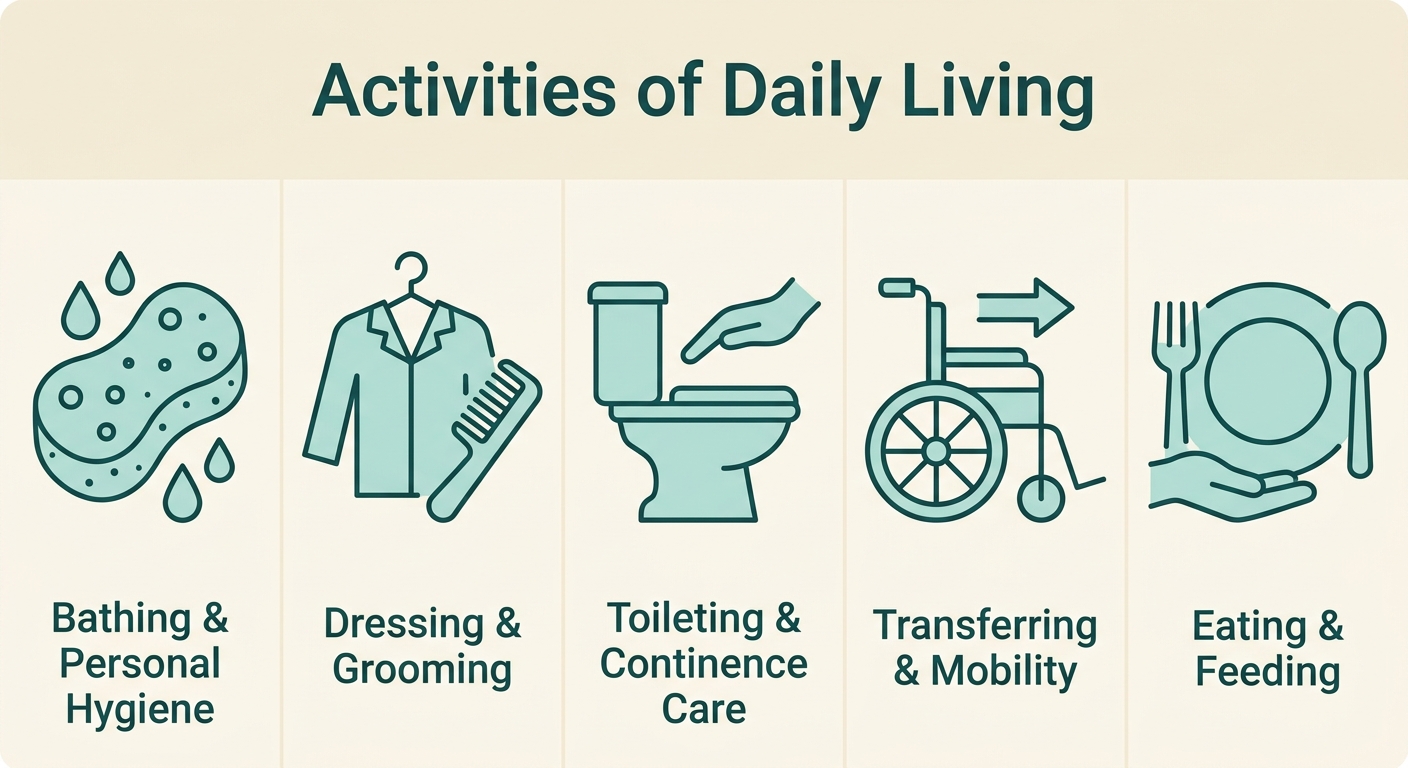
Below is a quick reference showing common activities of daily living and how our hospice aides assist with each one.
| ADL Task | What the Hospice Aide Does |
|---|---|
| Bathing & personal hygiene | Helps with sponge baths, bed baths, oral care, and hair care |
| Dressing & grooming | Assists with choosing clothes, buttoning, shaving, and general grooming |
| Toileting & continence care | Assists with transfers to the bathroom, perineal care, and brief changes |
| Transferring & mobility | Supports safe movement from bed to chair, standing, and walking with a walker or cane |
| Eating & feeding | Sets up trays, cuts food, and offers food or fluids |
Bathing and personal hygiene: We provide personal hygiene assistance through sponge baths, bed baths, oral care, and hair washing while safeguarding privacy and comfort. Aides check water temperature, use skin-friendly products, and work gently to maintain skin integrity and emotional well-being.
Dressing and grooming: We help individuals choose comfortable clothing that respects personal taste, assist with buttoning and shaving, and provide gentle grooming like hair brushing and nail care to preserve familiar daily routines.
Toileting and continence care: Our aides offer discreet, respectful support with bathroom transfers, perineal care, and brief changes. They focus on maintaining skin health, preventing irritation, and handling continence needs with sensitivity.
Transferring and mobility: Safe movement is a priority. Aides support transitions from bed to chair, assist with standing, and walk alongside with a walker or cane to reduce fall risk. They also guide simple range-of-motion and positioning exercises to enhance comfort.
Eating and feeding: At mealtimes, aides set up trays, cut food into manageable pieces, offer food and fluids, and assist with safe positioning. They respect preferences and provide gentle encouragement to make meals as pleasant as possible.
Bathing and personal hygiene are among the most personal daily tasks our aides assist with; our certified nursing assistants are trained to uphold dignity and privacy.
Bathing, Grooming, and the CNA’s Role in Hospice ADL Support
The Art of Bathing and Grooming Assistance
We match the bathing method to each patient’s mobility and energy level. For those who spend much of the day in bed, our aides provide thorough bed baths, towel baths, and sponge baths using warm water and soft cloths. When a patient can sit up and tolerate movement, we offer mobility and transfer support to safely help them into a shower chair or onto a tub bench.
Our personal care includes shampooing and gentle hair combing, oral hygiene and denture care, shaving, nail care, and the application of lotion or deodorant. By listening to preferences and watching for nonverbal cues, we can adjust pressure, speed, and technique to honor what the patient needs in that moment.
Understanding the Certified Nursing Assistant’s Scope in Hospice
Their scope is limited to personal care tasks delegated through the patient’s care plan — bathing, grooming, dressing, feeding, toileting, and assisted transfers. CNAs are trained to notice and report any change in condition, but they do not perform nursing assessments, make care-plan decisions, or administer medications. This clear line keeps every action safe and aligned with the patient’s clinical needs, while families know a registered nurse is always a phone call away and 24/7 on-call support is available.
| ADL Category | Hospice Aide | Certified Nursing Assistant (CNA) | Family Caregiver |
|---|---|---|---|
| Bathing | Provides hands-on bathing assistance, matching method to mobility level | Performs delegated bathing tasks following the care plan | Offers informal support, helps with washcloths or setup |
| Grooming | Assists with hair care, shaving, nail care, and oral hygiene | Carries out grooming tasks under RN supervision and reports changes | Helps with daily grooming routines and maintains familiar routines |
| Dressing | Helps select clothing and assists with dressing to maintain dignity | Dresses the patient according to the care plan, noting any difficulties | Chooses comfortable clothing and provides gentle assistance |
| Toileting/Incontinence Care | Assists with bedpan, commode, or bathroom visits and incontinence care | Provides incontinence care as delegated, maintaining skin integrity | Supports toileting needs and manages supplies at home |
| Mobility & Transfers | Assists with walking and repositioning using safe techniques and equipment | Performs transfers and mobility assistance under RN delegation | Encourages safe movement and assists with walking at home |
Together, these complementary roles create a circle of care that respects each patient’s dignity and supports family caregivers in their home.
Maintaining Dignity and Privacy During ADL Care
Maintaining dignity and privacy is woven into every task. We knock before entering and close doors or curtains to create a private space. Throughout care, we keep the patient covered and uncover only the area being washed or groomed. We warm the room, test water temperature, move slowly, and allow rest breaks.
Our touch is gentle, and we explain each step in a calm voice. If a patient resists, we pause and adjust — trying a different position or slowing down. This reflects the mercy and kindness that guides our team. Cultural and religious preferences are part of the care plan, so modesty and grooming customs are always respected. These practices aren’t limited to bath time. They are the foundation of every visit, including mealtime assistance and the other daily comfort routines our team provides.
Daily Visits and Meal Support: The Hospice Aide’s Routine
Just as bathing and grooming bring dignity to the personal care experience, the steady rhythm of daily visits and meal support extends that same compassionate touch into every corner of the home. Amara Hospice Care designs each aide’s routine around the person being served, weaving clinical guidance into the simple, comforting acts that make a house feel like home.
How Many Hours Does a Hospice Aide Spend with a Patient Each Day?
The length and frequency of hospice aide visits are never one-size-fits-all. When exploring hospice aide services for activities of daily living, you will find that schedules are built on the unique needs, preferences, and circumstances of the patient and family. Visit length and frequency are set in the care plan and can shift as conditions change or family availability evolves.
Several factors influence how an aide’s schedule is shaped:
- The patient’s need for hands-on ADL assistance: some people require more help with mobility, bathing, or eating, while others need only supervision.
- Family caregiver availability: aides often fill gaps, offer respite, or cover tasks that are difficult for family members.
- Care plan priorities: the hospice team — including the nurse, social worker, and physician — helps set which daily activities need consistent professional support.
That adaptability is part of the Amara difference.
Light Meal Preparation and Nutrition Support in Daily Care
Light meal preparation focuses on familiar, comforting foods that honor the patient’s tastes and abilities rather than elaborate cooking. Meals and snacks are chosen for ease, safety, and enjoyment, with attention to hydration throughout the day.
| Meal Assistance Task | Aide’s Role | Dietary Considerations |
|---|---|---|
| Making breakfast | Preparing simple items like toast, eggs, or cereal | Watching for swallowing difficulties and adjusting texture as needed |
| Preparing light lunches | Making sandwiches, soups, or salads | Adapting to soft-food diets or honoring taste changes |
| Assembling snacks | Putting together fruit, yogurt, or crackers | Offering high-calorie, nutrient-dense choices when appetite is poor |
| Encouraging hydration | Pouring drinks and keeping a cup within reach | Following thickened-liquid orders when the care team specifies them |
Aides watch for swallowing difficulty, taste changes, or appetite loss and report those observations to the nurse, who may recommend texture adjustments such as pureed or minced options.
Coordinating Care with Family and the Hospice Team
No hospice aide works alone. Every visit, prepared meal, and quiet observation becomes part of a larger conversation among the patient, family, and hospice team. The aide serves as a bridge, relaying small but important details — changes in appetite, balance, mood, or pain — to the registered nurse or social worker so the care plan can be adjusted promptly.
Support for family caregivers includes practical tips, brief coaching on safe feeding or positioning, and respite while the aide keeps the patient comfortable. When questions go beyond the aide’s scope, we connect families with nurses, chaplains, or social workers.
With 24/7 on-call support and a team that communicates regularly, the aide’s daily presence becomes a consistent source of reassurance. The observations gathered during each visit — how well the patient ate, whether pain seemed managed, how the family is coping — form the foundation of the aide’s reporting role and help the team respond before small concerns become bigger issues.
Observing and Reporting: The Hospice Aide’s Expanded Role in Patient Well-Being
During every personal care visit, while helping your loved one with bathing, meals, or moving between bed and chair, our hospice aides are also carefully noticing how they are feeling. They are trained to observe changes in comfort, breathing, skin, appetite, and bowel and bladder function, and then report those observations to the registered nurse. The aide never makes a diagnosis or decides to change a treatment; that is the nurse’s independent assessment. Because the aide sees the patient frequently, small shifts often come to light early, allowing the care plan to adjust before a problem grows.
Our aides watch for five key areas.
| Observation Area | Specific Signs to Monitor | When to Report to the Nurse |
|---|---|---|
| Pain & Comfort | Wincing, moaning, guarding, restlessness, especially during transfers | New or worsening pain not relieved by current comfort plan: report immediately |
| Breathing | Shortness of breath, noisy breathing, new cough, pale lips | Labored breathing or any unexpected change in breathing pattern: report right away |
| Skin Condition | New redness, tears, bruising, rash | Skin breakdown, open areas, or sudden bruising: report same day |
| Appetite & Hydration | Eating or drinking less, weight change, difficulty swallowing | Changes lasting more than a day or refusal of most meals: mention at next visit, or sooner if sudden |
| Bowel & Bladder Function | Constipation, diarrhea, inability to urinate, new incontinence | Discomfort or a marked change in usual pattern: share with nurse promptly |
Even a subtle change, such as a patient who has always eaten well suddenly refusing most meals, is worth sharing. Families, too, can always call our 24/7 on-call team at 989.200.5000 with any concern between scheduled visits. Each aide documents everything they see during the visit so the nurse has the full picture and can keep the care plan current.
Frequently Asked Questions About Hospice Aide Services
When a hospice aide joins a team, families often have practical questions about daily personal assistance.
What does a hospice aide do?
A hospice aide provides non-medical personal care like bathing, dressing, and grooming. At Amara Hospice, aides work alongside nurses, therapists, and volunteers.
How do aides help with daily tasks like personal grooming?
Our plans are tailored to each person’s routines and preferences, always preserving dignity.
Is hospice aide support available around the clock?
Aide visits are scheduled in your loved one’s care plan, and our 24/7 on-call team means families can reach us any time a concern arises.
How often are aide visits scheduled, and can the plan change?
Visit frequency is determined by individual needs and can be adjusted as conditions evolve. Our team regularly reassesses care plans to maintain the right level of comfort.
Embracing Compassionate Care with Amara Hospice
Our hospice aide services for activities of daily living embody the dignity and compassion at the heart of Amara Hospice Care.
We help patients and families promote a state of Amara of mind through our dedicated, multidisciplinary team, available 24/7. Individualized, culturally sensitive care plans ensure respectful support.
Please reach out. Eligibility for hospice care must be determined by a physician; outcomes vary because care is individualized. Medicare and insurance documentation requirements may apply.
Request Your Free Assessment
Now that you understand how hospice aides assist with activities of daily living, from personal grooming to meal support and observation, it’s time to consider how Amara Hospice Care can support your family. We invite you to take the next step with a free, no-obligation assessment to discuss your loved one’s unique needs. Our compassionate care team in Saginaw, Michigan is available 24/7 to answer your questions and guide you. With personalized care plans and a multidisciplinary approach, we help promote a state of Amara of mind, where grace, mercy, and kindness meet daily comfort. Reach out today to learn how our hospice aide services can bring dignity and support to your family. There’s no pressure, just a conversation about how we can help.