Table of Contents Evaluating Hospice Pain Management: A Family’s Guide Understanding the Role of Hospice Pain Management Specialists Assess Your Loved One’s Pain and Comfort Needs Recognizing and Managing Breakthrough Pain Conducting a Total Pain Assessment for Holistic Care Scheduling Regular Medication Reviews with Your Hospice Team Ensuring Round‑the‑Clock Pain Support and After‑Hours Care Collaborating …

Table of Contents
- Evaluating Hospice Pain Management: A Family’s Guide
- Understanding the Role of Hospice Pain Management Specialists
- Assess Your Loved One’s Pain and Comfort Needs
- Recognizing and Managing Breakthrough Pain
- Conducting a Total Pain Assessment for Holistic Care
- Scheduling Regular Medication Reviews with Your Hospice Team
Evaluating Hospice Pain Management: A Family’s Guide
When you begin evaluating hospice pain management specialists for a loved one, it is completely natural to feel overwhelmed. Families in Saginaw and throughout the greater Detroit area face this delicate decision every day, and we understand the weight it carries. Having clear, practical information, though, can truly ease some of that uncertainty. We operate from physical locations in Saginaw and Southfield and serve Saginaw County and the greater Detroit area, which helps us coordinate local care and make services accessible.
This guide is meant to give you a straightforward way to assess how a hospice program manages pain, so you can feel more confident in the choice you make. At Amara Hospice Care, our approach is built around a comprehensive, multidisciplinary team that works together to create individualized, culturally sensitive care plans. With 24/7 on-call support, we are here to help your family at every turn. Our team includes nurses, social workers, therapists, chaplains, trained volunteers, and pain management specialists who each contribute different expertise to comfort and symptom control.
Understanding what pain management specialists do day to day can help you feel more assured about the care your loved one will receive.
When families first begin this process, a practical question is what a typical day looks like for someone receiving hospice pain management. We visit with patients in their homes and in facilities, and our clinical team coordinates visits based on each person’s needs. Nurses and certified aides monitor symptoms and adjust comfort measures, while social workers and chaplains support emotional and spiritual needs. These coordinated visits are not just clinical check-ins; they are chances for us to listen, observe subtle changes, and respond quickly to discomfort. Visits and services are scheduled with attention to geography and timing so that care from our Saginaw and Southfield offices can reach patients across the counties we serve.
A hallmark of effective pain management is clear communication. We make it a priority to establish straightforward ways for families to reach us and for our team to report changes back to you. That means regular updates on pain levels, what interventions have been tried, and what we expect to try next. We work to explain options in plain language so you and your loved one can participate in decisions, and we encourage questions at every step. We document those conversations and updates so that everyone on the care team has access to the same information and families receive consistent follow-up.
Our multidisciplinary model brings different perspectives to a person’s plan of care. Nurses focus on symptom control and medication management, social workers help identify stressors and practical needs, therapists provide nonpharmacologic approaches to comfort, and chaplains address spiritual concerns. When we say multidisciplinary, we mean an ongoing conversation among these team members so that physical comfort, emotional well-being, and dignity are addressed together. Volunteers and therapists often participate in that conversation, offering companionship and complementary therapies that support the clinical plan.
Families often ask how we personalize a care plan. We begin with a careful assessment that includes the patient’s pain history, current medications, daily routines, cultural preferences, and personal goals for comfort. From there, we craft an individualized plan that blends clinical and supportive measures. Because every person experiences pain differently, personalization isn’t an add-on — it’s central to how we approach symptom control and daily comfort. Eligibility for hospice care is determined by a physician based on a life-limiting medical condition and limited life expectancy, and we help families understand that process during the initial assessment.
Nonmedication comfort measures are an important part of what we offer. Massage and music therapy, simple repositioning, warm or cool compresses, and sensory routines can all reduce distress and complement medication when needed. These approaches are integrated into the plan when they match a person’s preferences and goals, and they can provide meaningful relief without adding clinical complexity. Where appropriate, these services are provided by trained staff or volunteers with experience in supportive complementary therapies.
Medication management is handled carefully and respectfully. Our nursing team monitors effectiveness and side effects, and we coordinate with the attending physician when changes are needed. We explain the purpose of each medication and how it fits into the overall comfort plan, and we watch for interactions or intolerances that could affect quality of life. Our aim is to achieve comfort while minimizing burdensome side effects.
Availability matters when symptoms change quickly. We provide 24/7 on-call support so families can reach a clinician at any hour with urgent concerns. That around-the-clock access helps prevent small problems from becoming crises and gives families reassurance that expert help is only a phone call away. When we say 24/7 support, we mean clinical guidance and, when necessary, timely in-person follow-up to address emergent needs. Our two-office structure supports broader geographic coverage so that timely follow-up can be coordinated across the communities we serve.
Another area families should consider is how a hospice team supports caregivers. We know that caregiving can be exhausting, and we provide education on safe lifting, medication schedules, and ways to recognize and report symptoms. Social workers and volunteers also assist with practical arrangements and respite options so caregivers can rest and maintain their own health. Bereavement services are offered to help families process grief both during care and after a loved one’s death.
Cultural sensitivity and respect for personal preferences are central to our practice. We listen for cultural or religious practices that influence comfort measures, food choices, or the role family members wish to play in care. This respectful approach means we adapt plans rather than require families to fit a rigid model, and we incorporate traditions that provide emotional and spiritual comfort.
Coordination with other clinicians is another sign of a well-organized pain management program. We collaborate with attending physicians and facility staff to ensure that changes in condition are shared promptly and that everyone involved understands the current plan. This collaborative stance reduces confusion, avoids duplicated treatments, and helps the whole team act in concert when a patient’s needs change. We also provide community education and in-service training so facility partners and staff understand our approaches and can work smoothly with our teams.
Families sometimes worry about eligibility and how hospice is started. Eligibility for hospice care is determined by a physician based on a life-limiting medical condition and limited life expectancy. We help families understand this process, assist with referrals, and coordinate an initial assessment that explores needs, preferences, and immediate comfort concerns. From that assessment we develop the first iteration of a care plan and discuss next steps so families know what to expect.
Documentation and measurable goals help keep a plan honest and useful. We record pain levels, interventions tried, and the patient’s response, and we review those notes at interdisciplinary team meetings. These discussions allow us to refine the plan over time and ensure that everyone involved — family included — understands why changes are being made. Clear records also make transitions between shifts and clinicians smoother and safer. Our interdisciplinary reviews typically include nurses, social workers, therapists, chaplains, and when appropriate, volunteers and the attending physician so that the care plan reflects multiple perspectives.
When evaluating a hospice program, ask about staff training and the range of services available. We staff nurses, certified aides, social workers, therapists, chaplains, and trained volunteers who collaborate with family members to create individualized, goal-driven care plans. We also offer specialized services such as massage and music therapy, and we provide bereavement counseling and community education to support families beyond direct clinical care. Knowing who will visit and what each person contributes can help you assess whether a program’s model fits your family’s needs.
Practical things matter as much as clinical ones. Ask how quickly the team will respond to an urgent call, whether clinicians can make same-day visits when pain changes suddenly, and how you will receive updates when different team members are involved. We aim to set realistic expectations about visit frequency and response times while remaining flexible to changing needs. Clear communication about logistics reduces stress and helps families plan for the day-to-day realities of care.
Families also benefit from guidance on symptom tracking. Keeping a simple daily log of pain levels, times when symptoms worsen, what seems to help, and any side effects from medications can be invaluable. This information helps our clinicians spot patterns and make informed adjustments. Our team can show you simple ways to track this without adding undue burden.
Understanding the role of volunteers and complementary therapies is part of a full picture. Volunteers can offer friendly visits, assist with light errands, and provide companionship that supports emotional well-being. Complementary therapies such as music and massage are provided by trained staff or volunteers where appropriate and are used to enhance comfort alongside clinical treatments.
We want families to know what good oversight looks like. Regular interdisciplinary meetings, thoughtful documentation, and involvement of the attending physician when changes occur are signs of responsible care. We hold these conversations routinely so that pain management strategies evolve with the patient’s condition and goals.
Finally, trust grows from small, consistent actions: clinicians who listen, families who are included in care conversations, and teams who respond promptly when symptoms change. We aim to be that steady presence — providing skilled symptom control, emotional and spiritual support, and practical help so families can focus on time with their loved one. Understanding what pain management specialists do day to day can help you feel more confident about the choices you make, and we are here to walk alongside you through each step.
Understanding the Role of Hospice Pain Management Specialists
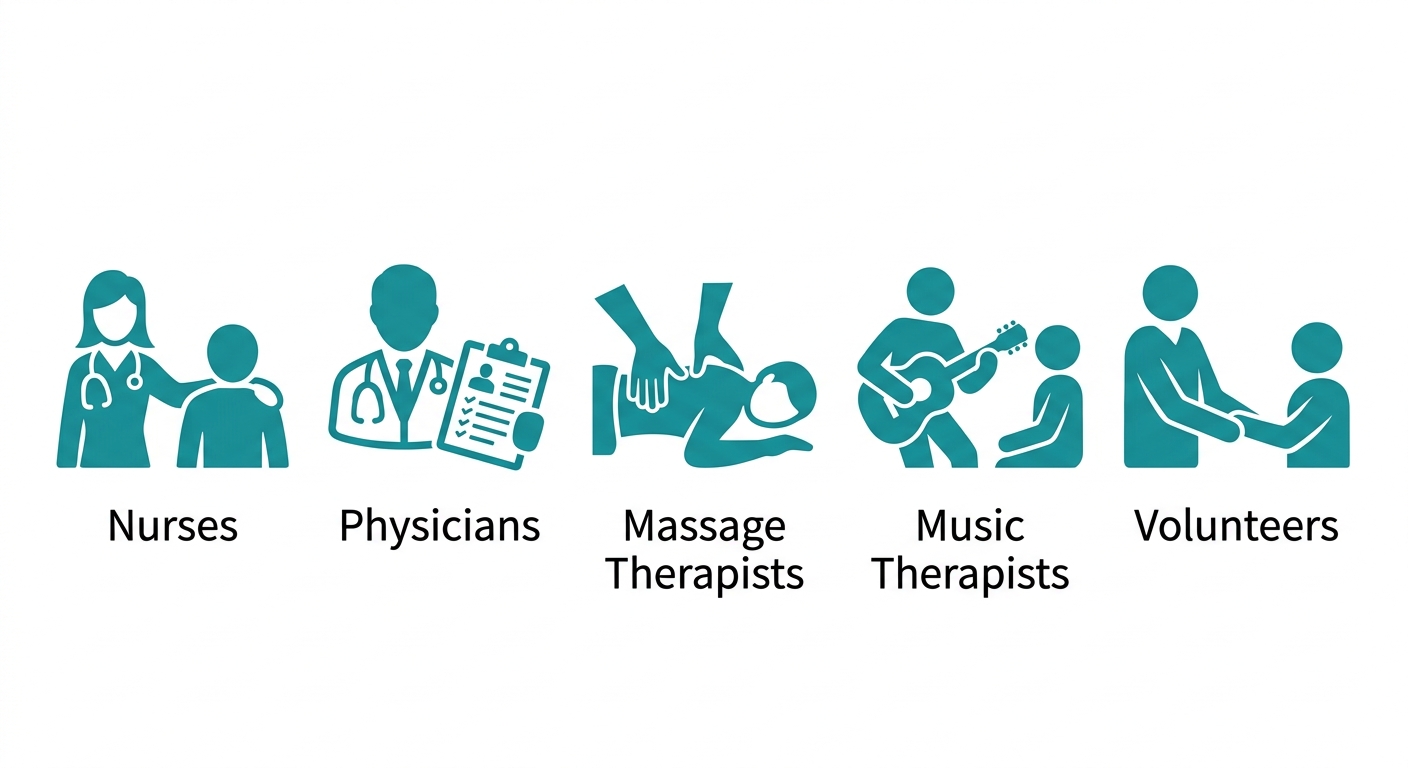
After learning how hospice programs evaluate pain, you wonder who delivers comfort. At Amara Hospice Care, our hospice pain team includes nurses, physicians, certified nursing assistants, and compassionate massage and music therapists, supported by dedicated volunteers. This team focuses on managing symptoms so that the person can enjoy moments with family, free from distress. We sit with families to understand what matters most, then create individualized, culturally sensitive care plans that honor each person’s background and preferences.
Pain does not keep office hours. We offer 24/7 on-call support, so families can reach a specialist by phone day or night. Our specialists are skilled in breakthrough pain management, responding to sudden pain flares between regular visits by adjusting the care plan right away.
Our focus is comfort, dignity, and quality of life, never a cure. This is a mission of grace, a commitment to presence, compassion, and peace. As you reflect on your loved one’s needs, pay attention to their pain patterns and what soothes them, so you can share those details with our care team.
Assess Your Loved One’s Pain and Comfort Needs
You spend more time with your loved one than anyone else and know him or her best. Use these observations to identify discomfort and share them with our team. While our care team monitors physical symptoms, you see the subtle changes, like a grimace, a moan or a guarded body position, that tell you discomfort is there even when the cause is not clear.
Total pain includes the emotional and spiritual discomforts of loneliness and fear. These concerns can deepen suffering when not addressed. Alert us when these things occur.
We will listen with mercy and kindness, then adjust your loved one’s individualized care plan to meet his or her needs. We reassess pain regularly, especially after medication changes; your observations keep us ahead of discomfort. Because pain can flare up suddenly between scheduled doses, our 24/7 on-call team is always ready to respond quickly.
Recognizing and Managing Breakthrough Pain
Hospice pain management specialists understand that breakthrough pain—a sudden, intense spike that breaks through around-the-clock medication—can flare when baseline pain is well controlled, often triggered by movement, turning, bathing, or dressing. You might notice sudden grimacing, moaning, restlessness, rapid breathing, or your loved one guarding a body part. At the first sign, call us, and if your care team has ordered an as-needed medication, give it only as your nurse has instructed; acting quickly helps comfort your loved one before the pain escalates. Gentle repositioning, massage, warm or cold packs (as your care team advises), soft music, and quiet distraction can help soothe the moment. If the pain persists, spikes, or doesn’t respond to the rescue dose, call our 24/7 on-call nurses, who are available day and night. Keep a simple log: time, intensity (0–10), what you gave, and what helped, so our care team can fine-tune the plan. Our total pain assessment also looks at emotional and spiritual needs, helping us support whole-person comfort.
Conducting a Total Pain Assessment for Holistic Care
When we recognize that pain can break through, we look beyond the physical to assess the total pain of the individual. The concept of total pain is particularly useful during hospice and palliative care to address all forms of pain experienced by the individual. Our total pain assessment integrates all aspects of pain including physical, emotional, social and spiritual. We train our nurses to assess pain and to evaluate the factors that aggravate and ease pain. This training allows our nurses to identify the various contributors to an individual’s experience of pain, beyond the physical, to the emotional and social. We look for meaning in human relationships, including broken relationships, and find that these become a large part of the pain. Our spiritual team members and social workers collaborate with our nurses to discover and address the needs of an individual. Massage and music therapists are involved only if they add to the individual’s sense of comfort.
Insights about our client are used to develop a care plan that is individually tailored to the client. The care plan is altered to incorporate the client’s cultural preferences. We revisit care plans regularly and they guide medication reviews so comfort remains the priority.
Scheduling Regular Medication Reviews with Your Hospice Team
Once the pain management team has evaluated your needs in the various dimensions of your being, e.g. physical, emotional and spiritual, the next step is to schedule regular medication reviews.
A medication review brings together our hospice nurse, the attending physician, and you or your family caregiver. Prepare by listing every medication, including over-the-counter and as-needed (PRN) items, along with the current schedule and any side effects or pain changes. During the review, we confirm each medication still supports the care plan, adjust doses or switch forms to maintain comfort, and stop medications no longer helpful. The most important safety rule: never change, skip, or stop a hospice medication without our team’s direction. If a question pops up between visits, our 24/7 on-call nurse is ready to help.
There are many scheduled reviews throughout the plan of care. You can always request a review sooner if you sense a change.
Ensuring Round-the-Clock Pain Support and After-Hours Care
We closely monitor your loved one’s pain management plan, so we can quickly address changes in pain. After hours, a registered nurse who works for our hospice is on-call, not an answering service. This nurse can also call a physician or advanced practice clinician to make changes to your loved one’s plan of care.
We are all working together to individually manage pain. This includes our nurses, hospice aides, massage and music therapists, social workers, chaplains, volunteers, and more. Nurses who are on call over the weekend are able to adjust the plan of care, if necessary. If pain increases, an on-call nurse can adjust the plan of care.
This live, personal response is shared with the hospice physician to refine symptom control, promoting a state of calm for your family.
Collaborating with Your Hospice Physician on Symptom Control
The hospice physician is the medical lead at our hospice. Our hospice physician guides pain and symptom management with one focus: your loved one’s comfort and quality of life. This is comfort care, not curative care.
When symptoms change, call us. We have a 24/7 phone line. A nurse assesses your loved one, by phone or in person as needed, works with the physician on a plan, and updates the plan of care if necessary. Your involvement is important to us.
A team of professionals works with us to create an individualized, comfort-based plan for the resident. We provide massage therapy, music therapy, and other activities, as well as assistance with grooming, all while caring for the resident and considering comfort and positioning. These therapies help manage the symptoms of emotional distress and anxiety, as well as pain and other physical symptoms.
Physician-guided care continues day and night, so you’re never alone. The collaborative nature of our staff creates a well-rounded approach to comfort. This is what families should look for when selecting a hospice partner.
Evaluating Hospice Pain Management Programs and Making Your Choice
Once the hospice physician and you have determined the plan for symptom control, the next step is to evaluate the pain management program behind that plan. Here are some criteria, and our program measures up.
- Care team: A multidisciplinary group (nurses, hospice physician, massage and music therapists, social workers, volunteers). Our team brings all these roles together.
- Personalized care: Care plans should adapt to the person and honor cultural traditions. Every plan is individualized and culturally sensitive.
- 24/7 availability: Round-the-clock on-call support. We answer calls day and night.
- Comfort services: Massage therapy, music therapy, psycho-social support, and bereavement services. We deliver them all.
Ask about after-hours response and whether the plan is designed around the patient’s situation. To learn more about our caring and compassionate hospice services, contact us to learn more about pain management for a family member in the Saginaw and Greater Detroit areas.
Addressing Common Hospice Pain Management Challenges
Even in an ideal hospice setting, breakthrough pain is always a possibility. Pain management needs can change dramatically with condition progression, and family members can worry that not enough is being done.
When our care team becomes aware that pain signals have changed, we respond and adjust our plan right away rather than waiting for the next scheduled review, using the new observations your family reports. Taking a proactive rather than reactive approach helps keep pain under control.
Amara Hospice Care weaves comfort-focused therapies directly into each individualized care plan. Non-medication supports that often prove meaningful include:
- Massage therapy
- Music therapy
In addition to traditional pain management, other approaches including guided imagery and therapeutic touch, may be beneficial. These approaches work in conjunction with traditional pain management approaches and focus on the entirety of the pain experience.
Pain concerns do not keep business hours, so neither do we. Being concerned about pain management means that there is no time to wait until the next business day, which is why we have a 24/7, 365 on call service that is available to families.
Every person’s pain experience is personal, and we shape care plans that honor cultural values, individual preferences, and shifting needs. Our team walks alongside each family with steady, around-the-clock support, so no one navigates the difficult moments without a compassionate voice on the line. If you have concerns or simply need to talk something through, we are here and reachable at 989.200.5000.
Moving Forward with Amara Hospice Care
Facing pain at the end of life can feel overwhelming, and no one should have to make these decisions alone. At Amara, our staff is with you every step of the way.
We build individualized, culturally sensitive care plans that honor each person’s unique needs and values. Our multidisciplinary team—including nursing, pain management, massage and music therapy, bereavement counselors, and trained volunteers—works together around the clock, with 24/7 on-call support for patients and families across Saginaw County and the greater Detroit area.
When you’re ready to speak with hospice pain management specialists in Saginaw, we invite you to reach out to us. Eligibility for hospice care must be certified by a physician, and because outcomes vary and care is always individualized, we encourage you to consult a healthcare professional for clinical decisions. We’ll be here to walk with you through every step of the journey.
Start Your Free Assessment Today
Now that you understand what to look for in a hospice pain management team, it’s time to see how our hospice puts those principles into practice. Our compassionate team of nurses, physicians, and therapists builds a care plan around your loved one’s unique needs. With 24/7 on-call support, you’ll never face a pain crisis alone. Personalized comfort measures—including massage and music therapy—address the whole person, not just symptoms. Amara’s free initial assessment helps you determine whether hospice care is the right fit for your family. Reach out to our team in Michigan to schedule a confidential conversation. Taking this step brings clarity and support when you need it most. Medicare/insurance eligibility and documentation requirements may apply.