
Table of Contents
Understanding Hospice Eligibility Basics
At Amara Hospice Care, we know that navigating hospice eligibility can feel overwhelming for families facing a loved one’s terminal illness. Hospice provides comfort-focused care for patients with a life expectancy of six months or less if the illness follows its typical course. This end-of-life support emphasizes quality of life through symptom management and emotional aid, helping individuals find peace in their final days.
Key hospice eligibility criteria include a terminal diagnosis, noticeable functional decline like increased fatigue or frequent hospitalizations, and certification by a physician. Eligibility for hospice must be determined by a physician, as outcomes may vary and care is individualized. In Michigan, Amara Hospice care in Michigan serves Saginaw County and the greater Detroit area with a multidisciplinary team of nurses, social workers, and volunteers offering 24/7 on-call services, pain management, and bereavement support. Medicare often covers these hospice eligibility requirements for qualifying patients, ensuring accessibility during this sensitive time.
Our guide ahead outlines the step-by-step process for terminal illness assessment, including considerations for conditions like dementia and heart failure, to help you prepare thoughtfully.
Preparing for Hospice Eligibility Assessment
At Amara Hospice Care, we understand that determining hospice eligibility can feel daunting, but we’re here to guide you through the preparation process with compassion and clarity. Preparing ahead ensures a smoother assessment and helps us create individualized care plans tailored to your loved one’s needs in Michigan communities. Our mission of grace, mercy, and kindness drives us to support families every step of the way.
To start, gather key documents that outline hospice eligibility criteria. Here’s a simple checklist:
- Recent medical records and physician notes detailing the patient’s condition.
- Symptom logs tracking changes like shortness of breath, weight loss, or frequent falls.
- Any advance directives or power of attorney forms.
These materials provide a clear picture for our multidisciplinary team, including nurses and social workers, to review.
Involving family and the care team early fosters open discussions about emotional readiness and hospice eligibility requirements. Common qualifying diagnoses include cancer, dementia, and heart failure, where a physician certifies a prognosis of six months or less if the illness follows its typical course—remember, eligibility must be determined by a physician. We emphasize qualifications for palliative care through Medicare’s hospice benefit, which covers comfort-focused services like pain management and bereavement support without aggressive treatments. Our volunteer services and psycho-social resources in the Detroit area and Saginaw help families navigate end-of-life care standards.
Preparation empowers informed decisions; contact us to explore hospice care timing in Michigan and our community education programs for personalized guidance.
Recognizing Terminal Illness Indicators
At Amara Hospice Care, we often see families in Michigan grappling with the emotional weight of a loved one’s declining health. Recognizing terminal illness indicators is the first crucial step in understanding hospice eligibility. This involves observing signs like persistent fatigue, unexplained weight loss, and increasing dependency on daily activities. We guide families through this process with empathy, helping you identify when a life expectancy assessment points to six months or less, as outlined in Medicare guidelines.
Consulting a physician for certification is essential for hospice eligibility criteria. Our clinicians in Southfield and Saginaw collaborate closely with doctors to evaluate disease progression in conditions such as cancer, heart failure, or dementia. They document declining metrics, like reduced ability to perform ADLs, using tools such as the Palliative Performance Scale to support accurate prognosis evaluations.
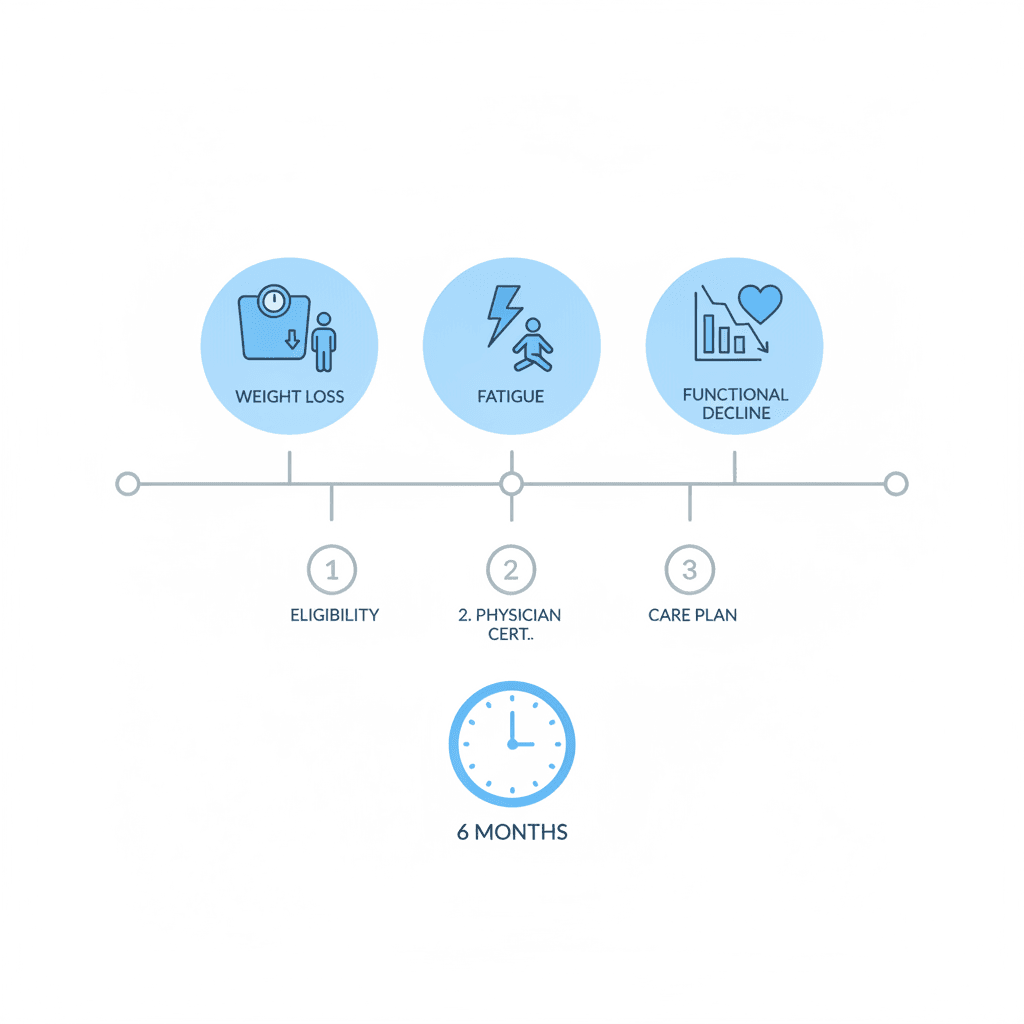
Visual guide to recognizing terminal illness indicators for hospice care
This recognition matters because it opens doors to timely, compassionate care that prioritizes comfort in life’s difficult times. Meeting hospice eligibility requirements ensures access to our multidisciplinary support, from pain management to bereavement services, allowing families to focus on meaningful moments. Remember, eligibility must be determined by a physician—outcomes vary, so consult healthcare professionals for personalized guidance.
Here are practical tips: Track symptoms in a journal, note changes in mobility or appetite, and discuss openly with your doctor. We at Amara Hospice Care are here to support you every step of the way with caring and compassionate hospice services.
Evaluating Functional Decline Levels
Determining hospice eligibility often starts with assessing functional decline, where patients face increasing challenges in daily activities. We at Amara Hospice Care guide families through this process by evaluating how daily function assessment reveals the need for support in everyday tasks.
To check activities of daily living (ADLs) like bathing, dressing, and eating, use simple observations or tools. Hospice eligibility criteria focus on whether a loved one requires substantial help for at least three ADLs, indicating significant decline. Scoring systems such as the Functional Assessment Staging Tool (FAST) for dementia or New York Heart Association (NYHA) classes for heart failure help quantify this. These measures highlight dependency evaluation, showing reliance on others for basic needs, which signals advancing illness.
This evaluation ties directly to hospice eligibility requirements, confirming when comprehensive care is essential. Our team, including aides and social workers, offers psycho-social hospice support to address emotional strains alongside physical ones, fostering dignity and comfort. Remember, eligibility for hospice must be determined by a physician (physician certification required).
For documentation, track specific examples of decline over time and consult our free assessments. This prepares families for next steps in condition-specific planning, ensuring personalized support in Saginaw County and the greater Detroit area.
Assessing Dementia for Eligibility
At Amara Hospice Care, we understand the challenges of assessing hospice eligibility dementia as the condition progresses. Hospice eligibility for patients with advanced dementia typically requires a physician’s certification that life expectancy is six months or less. We focus on compassionate support in Saginaw County and the greater Detroit area.
Hospice eligibility criteria often rely on the Functional Assessment Staging (FAST) scale from CMS guidelines. Stages 7 and above indicate severe cognitive and functional decline, such as loss of speech, inability to ambulate without assistance, and dependency for all activities of daily living. For instance, FAST stage 7a involves speaking fewer than six intelligible words, while stage 7f means inability to walk without help. Combined with comorbidities like infections or weight loss, these stages signal the need for hospice.
This evaluation helps families recognize when comfort care becomes essential, ensuring dignity in life’s final chapter. We emphasize why early assessment matters: it aligns care with the patient’s true needs, preventing unnecessary suffering.
Monitoring complications is key to meeting hospice eligibility requirements. Watch for recurrent infections, aspiration risks, or swallowing difficulties, which accelerate decline. At Amara Hospice Care, our music and massage therapies provide soothing relief, promoting peace for both body and soul. Always consult a physician for certification, as eligibility varies individually.
Evaluating Heart Failure Eligibility
Determining hospice eligibility for heart failure involves assessing advanced symptoms that signal a terminal stage. At Amara Hospice Care, we guide families in Michigan through this process, focusing on whether the patient meets key indicators like persistent shortness of breath, fatigue, and fluid retention despite optimal treatments. A physician must certify a prognosis of six months or less, often tied to Medicare hospice payment guidelines for coverage.
Hospice eligibility criteria center on the New York Heart Association (NYHA) class IV, where patients experience severe limitations even at rest, with ejection fractions typically below 20 percent and resistance to medications or devices. This cardiac decline assessment ensures care shifts to comfort over curative efforts, aligning with Medicare standards that require two physicians’ confirmation for admission.
Why evaluate this thoroughly? It helps families recognize when aggressive interventions yield diminishing returns, allowing a dignified transition to palliative support that prioritizes quality of life. Our multidisciplinary team, including pain specialists, addresses refractory symptoms holistically.
Practical tips include tracking daily symptoms and consulting your cardiologist early. We recommend discussing treatment resistance openly; eligibility for hospice requires physician certification, and outcomes vary based on individual needs—always seek professional advice for personalized decisions. In Michigan, our 24/7 on-call services provide ongoing monitoring to ease this journey with mercy and kindness.
Reviewing Medicare Coverage Options
At Amara Hospice Care, we guide families in Michigan through the process of understanding hospice eligibility under Medicare. The Medicare Hospice Benefit provides essential coverage for patients with a terminal illness, ensuring access to our caring and compassionate hospice services when hospice eligibility is met. To qualify, a physician must certify that the patient has a life expectancy of six months or less, based on terminal status hospice determination guidelines from the Centers for Medicare & Medicaid Services.
Once certified, patients elect hospice care by signing a statement, outlining the hospice eligibility requirements. This election shifts focus from curative treatments to comfort, covering services like nursing care, pain management, and our multidisciplinary support including psycho-social services and bereavement counseling. Medicare covers nearly all costs, with no copays for hospice-approved services, though some financial assistance basics like deductibles may apply—eligibility for Medicare must be confirmed, and documentation requirements apply.
Understanding these hospice eligibility criteria reassures families that quality end-of-life care is accessible without overwhelming financial burden. It allows focus on comfort and dignity during life’s difficult times.
For personalized advice on coverage qualification, contact our team at Amara Hospice Care—we’re here to help navigate this with mercy and kindness. Eligibility for hospice must be determined by a physician.
Consulting Healthcare Professionals
Determining hospice eligibility requires thoughtful steps, and we’re here at Amara Hospice Care to guide you through consulting the right experts. Start by scheduling an appointment with your physician to review your loved one’s condition against standard hospice eligibility criteria. Share detailed medical history, symptoms, and any recent test results. Next, reach out to a local hospice provider like us in Michigan—our team in Saginaw and Southfield is ready to assist. During discussions, focus on hospice eligibility requirements, such as declining health indicators and functional status, to get a clear picture of options.
Consulting professionals ensures an accurate expert evaluation, which is vital for compassionate end-of-life planning. At Amara, our multidisciplinary approach involves physicians, nurses, social workers, and chaplains who collaborate to assess needs holistically, promoting dignity and comfort.
Here are practical tips: Prepare a list of questions about care plans and support services beforehand. Bring relevant documents to streamline the conversation. Remember, eligibility for hospice must be determined by a physician—outcomes may vary, so personalized advice is key. We’re committed to supporting you every step of the way with our caring team.
Developing Personalized Care Plans
Once hospice eligibility has been confirmed by a physician, we at Amara Hospice Care begin developing a custom care strategy tailored to each patient’s unique needs and wishes. This process starts right after the initial consultation, where our multidisciplinary team collaborates closely with you and your family to outline clear goals for comfort, dignity, and quality of life. We incorporate a range of our services, such as nursing care, pain management, and volunteer support from compassionate individuals in Michigan who provide emotional companionship and respite.
Creating these individualized plans is essential because it ensures holistic support that addresses physical, emotional, and spiritual aspects during life’s most challenging times. By involving family input early, we foster a sense of partnership, helping everyone feel empowered and heard in promoting well-being for both patient and loved ones.
Here are some tips for effective planning: Share your loved one’s preferences openly to guide therapy integrations like massage or music; set realistic, measurable goals together; and review the plan regularly with our team to adapt as needs evolve. Remember, eligibility for hospice must be determined by a physician—outcomes may vary, so consult professionals for personalized decisions.
Finalizing Eligibility and Enrollment
Once we’ve helped you navigate the hospice eligibility criteria and confirmed that your loved one meets the hospice eligibility requirements, we’re ready to guide you through the enrollment process at Amara Hospice Care. This step ensures compassionate care begins promptly. First, our team will review the physician’s certification, as eligibility for hospice must be determined by a physician. You’ll sign necessary agreements outlining our services, including nursing care, pain management, and bereavement services tailored to Michigan families. Services start right away, with our multidisciplinary team creating an individualized plan focused on comfort and dignity. We conduct ongoing assessments to adjust care as needs evolve, always with a mission of grace, mercy, and kindness.
Why finalize quickly? It allows us to provide immediate support during life’s difficult times, promoting a state of peace for body and soul while addressing emotional needs through our bereavement programs, which continue up to 13 months post-loss.
Here are a few tips to make enrollment smooth: Gather medical documents in advance, ask questions about our 24/7 on-call services, and know that outcomes may vary—we tailor everything to your unique situation. Contact us today to start this caring journey.
Addressing Eligibility Challenges
Navigating hospice eligibility can feel overwhelming, but at Amara Hospice Care, we’ve helped many families in Michigan overcome these hurdles to access the compassionate support they need. Common misconceptions about hospice eligibility often create unnecessary barriers, preventing patients from receiving timely care that focuses on comfort and quality of life.
One frequent myth is that hospice means giving up on treatment, but in reality, it complements ongoing care for terminal illnesses. Another challenge arises when patients don’t meet strict hospice eligibility criteria right away, such as a six-month prognosis certification by a physician. Emotional resistance from families fearing the finality of the decision can delay qualification, while fluctuating health conditions make it hard to predict timelines. Denials due to incomplete documentation or insurance issues, particularly with Medicare, add to eligibility obstacles. Qualification hurdles like these affect countless individuals, but understanding them is the first step toward resolution.
We’ve seen how addressing these issues early improves outcomes. For denials based on hospice eligibility requirements, start by requesting a detailed explanation from your provider or Medicare. Gather medical records and consult your physician for recertification, as CMS guidelines allow appeals through face-to-face encounters with hospice professionals. Our team at Amara Hospice Care guides families through this process, ensuring all paperwork aligns with federal standards. Emotional barriers benefit from our psycho-social services, where counselors provide empathetic support to ease fears and foster acceptance.
Alternative therapies, like our massage therapy, offer comfort by alleviating pain, anxiety, and tension, helping patients meet comfort-focused goals even amid challenges. Remember, eligibility for hospice must be determined by a physician, and outcomes may vary—always consult a healthcare professional for personalized advice. Medicare documentation requirements may apply, so verify coverage details promptly.
If your loved one’s condition changes or initial assessments don’t qualify, revisit eligibility with us. We’re here 24/7 to reassess and provide the caring, comprehensive services that make a difference in life’s difficult times.
Navigating Your Hospice Eligibility Journey
Navigating hospice eligibility can feel overwhelming, but understanding the basics empowers you and your loved ones. In this eligibility pathway summary, we’ve covered the hospice eligibility criteria, such as a physician-certified terminal illness prognosis of six months or less, and the hospice eligibility requirements including Medicare coverage for qualifying patients. These elements form a clear care qualification overview, ensuring compassionate support when it’s needed most in Michigan.
At Amara Hospice Care, we offer comprehensive benefits tailored to your family’s needs, including 24/7 on-call services, pain management, massage and music therapy, and bereavement support. Our multidisciplinary team provides holistic care that honors dignity and comfort, guided by a mission of grace, mercy, and kindness. We’re committed to individualized plans that enhance quality of life during this journey.
Eligibility for hospice must be determined by a physician. We’re here to walk this path with you—reach out today for a free assessment and personalized guidance from our team in Saginaw or Southfield.
Resources
- Get Comprehensive End-of-Life Support from Amara Hospice Michigan
- Learn When Hospice Care is Right for Michigan Patients
- Access Psycho-Social Support for Hospice Emotional Needs
- Join Volunteer Roles at Amara Hospice in Michigan
- Find Bereavement Counseling and Support Groups at Amara Hospice
- Experience Tailored Massage Therapy for Hospice Comfort
- Understand Hospice Eligibility Guidelines for Clinicians in Michigan
- Explore Medicare Hospice Coverage and Payment Requirements
- Determine Hospice Eligibility for Dementia Using CMS Criteria
- Assess Terminal Status for Hospice Certification per CMS