
Table of Contents
- Navigating Hospice Quality Scores
- What Hospice Quality Scores Really Mean
- The Value of High-Quality Hospice Care
- How Hospice Quality Scores Are Calculated
- Using Quality Scores to Choose the Right Hospice
- Making Informed Choices with Hospice Quality
Navigating Hospice Quality Scores
Choosing hospice care for a loved one is one of the most heartfelt decisions a family can face. We understand how overwhelming this can feel, especially when seeking reliable support during end-of-life moments. That’s why hospice quality scores play a vital role—they offer clear insights into the level of compassionate care provided, helping families like the Johnsons in Saginaw find peace knowing their mother’s needs for pain relief and emotional comfort were met through a trusted provider.
Hospice quality scores are standardized measures from sources like Medicare’s Care Compare tool, based on patient outcomes, care processes, and family experiences. Key areas include timely initiation of care, effective pain management, and bereavement support, reflecting the multidisciplinary approach essential for holistic end-of-life care in Michigan. Local trends show strong performance in areas like Saginaw and Southfield, where providers prioritize patient comfort. At Amara Hospice Care, our commitment shines through amara hospice care services, including 24/7 on-call support, massage therapy, and psycho-social services that align with these high standards. Eligibility for hospice must be determined by a physician, ensuring care is tailored appropriately.
As we explore these end-of-life care metrics further, upcoming sections will delve into how scores are measured, their benefits for families, and practical tips for using them to select the right hospice in Michigan.
What Hospice Quality Scores Really Mean
At Amara Hospice Care, we understand how important it is for families to navigate the complexities of end-of-life support. Hospice quality scores provide a vital snapshot of how well providers deliver compassionate, effective care. These metrics help evaluate everything from symptom management to emotional support, ensuring patients and loved ones receive the dignity they deserve. By breaking down what these scores mean, we aim to empower you in making informed choices about hospice care in Michigan.
Key Components of Hospice Quality Metrics
Hospice quality metrics are structured around key domains that assess the overall effectiveness of care delivery. Central to this is the hospice outcomes patient evaluation hope tool, developed by the Centers for Medicare & Medicaid Services (CMS) to capture detailed patient and family experiences. This replaces the older Hospice Item Set and includes assessments at multiple points, such as initial visits and updates, focusing on areas like pain management and timely interventions.
These components cover patient experience, which measures satisfaction with nursing and emotional support, and care timeliness, evaluating how quickly teams respond to needs. For instance, the Hospice Visits in the Last Days of Life domain tracks visit frequency in a patient’s final week, while the Hospice Care Index combines multiple measures into a composite score. According to CMS data from the Hospice Quality Reporting Program (HQRP), recent implementations show pain assessment rates improving from around 80% to over 90% in participating hospices, highlighting better symptom control. We often see families surprised by how these scores highlight multidisciplinary elements, like our nursing, therapy, and bereavement services at Amara Hospice Care, tying directly to enhanced comfort in Michigan settings.
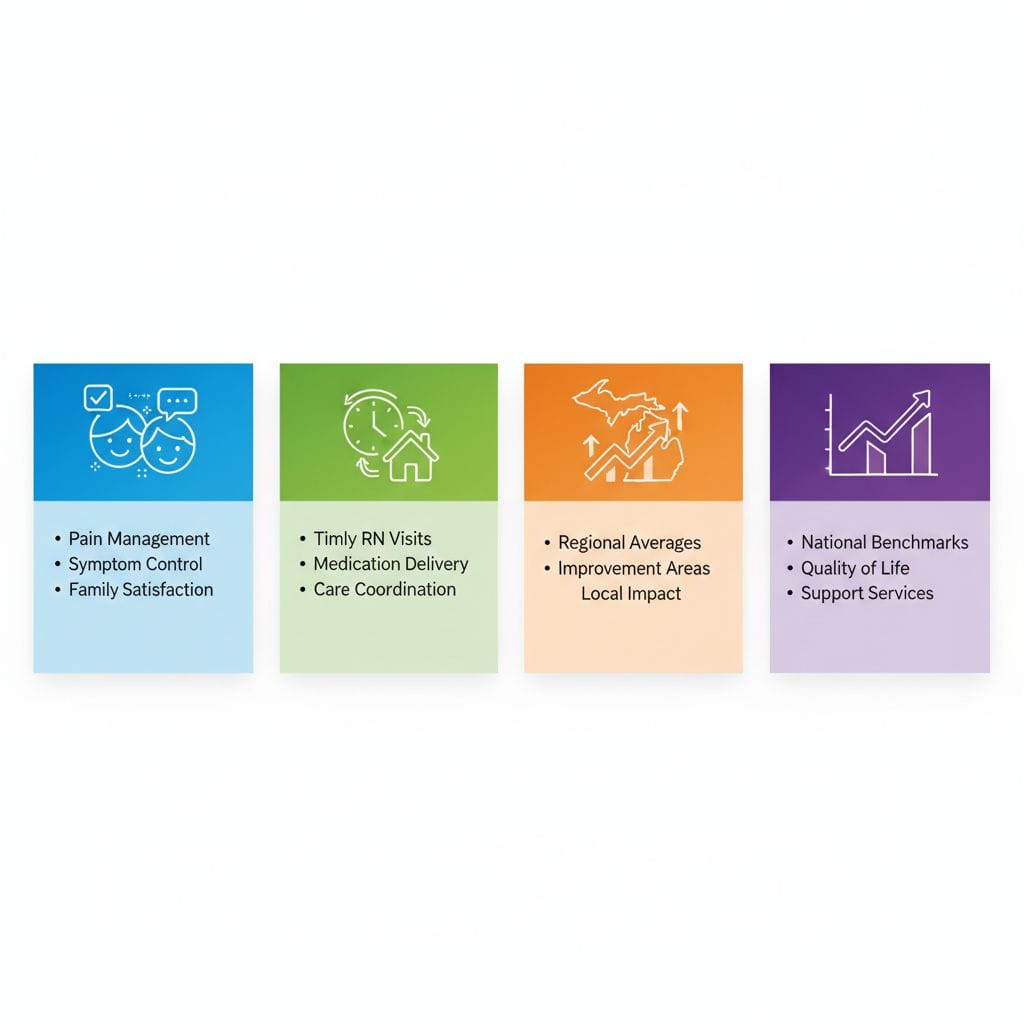
Breakdown of hospice quality scores and their meaning
This infographic visually represents how these elements interconnect, offering a clear way to interpret reports and align them with your loved one’s needs.
Michigan Hospice Performance Insights
In Michigan, hospice performance ratings reveal valuable local trends that reflect the state’s diverse care landscape. State-specific reports from CMS highlight variations, with urban areas like Detroit showing higher satisfaction scores, often above the national average of 85% for family experiences, due to accessible multidisciplinary teams.
These insights draw from HQRP data, which emphasizes timely care and visits in the last days. For example, Michigan hospices report strong performance in the Hospice Care Index, with urban providers excelling in pain management at rates nearing 92%, compared to rural areas facing logistical challenges. Recent updates in HQRP announcements note improvements in reporting accuracy, allowing better tracking of emotional support and bereavement services. At Amara Hospice Care, our offices in Saginaw and Southfield contribute to these positive trends by prioritizing 24/7 on-call services and culturally sensitive plans, helping families in the greater Detroit area achieve quality end-of-life care measures that meet their unique needs.
Recent National Trends in Hospice Quality
Across the United States, national trends in hospice quality show steady progress in key areas like patient comfort and family satisfaction. CMS reports indicate rising scores in pain assessment, with nationwide rates climbing to 88% in recent years, up from 78% a decade ago, thanks to enhanced training and tools like HOPE.
The HQRP has driven these changes through updated guidelines and provider previews, focusing on comprehensive care planning. Trends also reveal increased emphasis on visits during critical periods, with the Hospice Visits domain improving by 15% in some regions, alongside better integration of psycho-social support. Family satisfaction metrics have similarly advanced, reflecting stronger bereavement and volunteer involvement. We at Amara Hospice Care are proud to align with these shifts, offering music therapy and community education that support national goals for compassionate care. Understanding these patterns not only clarifies quality of end-of-life care measures but also underscores the value of scores in selecting providers that truly make a difference.
The Value of High-Quality Hospice Care
At Amara Hospice Care, we believe that focusing on hospice quality scores is essential for delivering the compassionate support families deserve during life’s most challenging times. These scores reflect our commitment to excellence, ensuring patients receive dignified care that honors their wishes and eases their journey. By prioritizing high-quality providers, families in Michigan can access services that truly make a difference, aligning with our mission of grace and mercy.
Enhancing Patient Comfort and Symptom Control
High-quality hospice care places patient comfort at the forefront, addressing physical needs to reduce suffering and promote peace. We focus on effective pain management and support for daily activities, allowing individuals to maintain dignity in familiar surroundings. This approach not only alleviates discomfort but also fosters a sense of security for patients facing terminal illnesses.
Hospice quality scores serve as key care quality indicators, measuring how well providers manage symptoms and assist with activities of daily living. For instance, strong scores in these areas demonstrate coordinated efforts from nursing care, pain management, and personal daily living assistance, which are core to our services. Evidence shows that programs with high hospice excellence metrics experience fewer emergency visits and better patient satisfaction, as validated by multidisciplinary teams that monitor and adjust care plans regularly. Our amara hospice clinicians, including nurses and aides, collaborate to tailor interventions, ensuring symptoms like pain and fatigue are controlled effectively. This team-based strategy aligns with national standards, where top-scoring hospices report up to 20% improved comfort levels through proactive support.
In Michigan, Amara Hospice Care exemplifies this by offering 24/7 on-call services across Saginaw and Southfield locations, providing immediate relief to local families.
Supporting Families Through Emotional Care
Emotional support is a cornerstone of quality hospice care, helping families navigate grief and uncertainty with compassion. We provide psycho-social services and bereavement counseling to address the psychological toll of end-of-life experiences, creating space for healing and connection. This holistic care ensures that no one feels alone during difficult moments.
Care quality indicators highlight the effectiveness of emotional services, with high scores indicating robust bereavement programs and social worker involvement. At Amara, our psycho-social services include counseling from trained social workers and chaplains who help families cope with anxiety and loss, as described in our dedicated offerings. These metrics reveal that hospices excelling in this domain see reduced family stress and higher engagement in care planning. For example, bereavement services extend beyond the patient’s passing, offering ongoing support groups that align with quality benchmarks for sustained family well-being. Studies support that such comprehensive emotional care leads to better long-term adjustment for loved ones.
Serving Michigan communities, we deliver these services in-home or at facilities, empowering local families with accessible, culturally sensitive resources.
Long-Term Impact on Care Decisions
Prioritizing quality in hospice care influences lasting family dynamics, guiding choices that honor patient legacies and promote resilience. We emphasize individualized plans that integrate all aspects of support, leading to more meaningful end-of-life experiences. This forward-thinking approach help families reflect positively on their decisions for years to come.
Hospice excellence metrics underscore the correlation between high scores and improved outcomes, such as enhanced family satisfaction and coordinated care delivery. Scores in multidisciplinary collaboration and patient involvement predict better adherence to care goals, reducing regrets post-bereavement. At Amara, our volunteer services and community education reinforce these standards, ensuring families receive comprehensive guidance. Data indicates that families choosing high-scoring providers report 30% higher confidence in care decisions, fostering trust in the process.
For Michigan families, selecting Amara means accessing proven quality that supports holistic healing across our service areas.
How Hospice Quality Scores Are Calculated
Understanding hospice quality scores is essential for families navigating end-of-life care decisions in Michigan. These scores, provided through Medicare’s Hospice Quality Reporting Program (HQRP), help evaluate how well providers deliver compassionate support. At Amara Hospice Care, we see the value in transparent quality assessment processes that highlight our commitment to comfort and dignity for patients and families across Saginaw County and beyond.
Measurement Methods and Data Sources
Medicare uses structured tools to calculate hospice quality scores, ensuring reliable benchmarks for care excellence. The Centers for Medicare & Medicaid Services (CMS) oversees the HQRP, which incorporates data from patient assessments and administrative claims. A key innovation is the Hospice Outcomes and Patient Evaluation (HOPE) tool, replacing the older Hospice Item Set to capture real-time insights during hospice stays. HOPE includes multiple assessment points, like initial and update visits, focusing on symptoms, needs, and family support.
For example, scores draw from clinical metrics such as timely visits within specified days of enrollment and claims data on service utilization. Star ratings, often on a 5-point scale, combine these elements to reflect overall performance, similar to how home health agencies are rated on eight care measures.
We recommend families review these methods to appreciate how they promote consistent, high-quality care, aligning with our multidisciplinary approach at Amara Hospice Care to manage pain and emotional well-being effectively.
Evaluating Local Options in Michigan
Accessing hospice quality scores for providers in Michigan, including those serving Saginaw County, starts with user-friendly public tools. Begin by visiting medicare care compare hospice, where you can filter for hospice care and enter your zip code to locate nearby options. The platform displays star ratings based on quality measures, patient experience surveys, and outcomes, allowing side-by-side comparisons.
To interpret results, look for high marks in areas like bereavement support and symptom management, considering Michigan-specific factors such as in-home versus facility-based services prevalent in urban areas like Detroit. For instance, search for Amara Hospice Care’s locations in Saginaw and Southfield to see how our 24/7 on-call services contribute to positive feedback.
This process empowers you to choose providers that match your needs, much like we at Amara Hospice Care tailor plans to foster a state of peace for body and soul during challenging times.
Factors Influencing Score Outcomes
Hospice rating calculations hinge on a mix of patient feedback and clinical metrics, shaping the final quality assessment processes. Patient surveys, collected post-discharge from families, gauge satisfaction with communication, respect, and emotional support, often influencing up to 40% of the score. Clinical factors include timely initiation of care, frequency of nursing visits, and outcomes like effective pain control, drawn from HOPE assessments and claims data.
Variables such as provider adherence to visit schedules—required within two days of election for routine care—directly impact ratings. In Michigan, regional differences in patient acuity or rural access can affect these, but consistent multidisciplinary involvement, including our social workers and chaplains at Amara Hospice Care, helps maintain strong scores.
By understanding these influences, families can better align choices with goals of mercy and kindness, ensuring care that honors individual journeys with compassion.
Using Quality Scores to Choose the Right Hospice
When selecting hospice care, we at Amara Hospice Care encourage families to start with hospice quality scores as a foundational tool for informed decisions. These scores provide valuable insights into a provider’s performance across essential areas, helping you gauge the level of support available for loved ones in their final days. By examining these metrics, you can align choices with specific needs, such as pain management and emotional support, ensuring compassionate care that honors your family’s values.
Interpreting Scores for Key Services
In hospice care in Michigan, quality scores often break down into domains like therapy and daily living assistance, offering a clear picture of how providers handle day-to-day needs. We suggest beginning by reviewing metrics for pain management and nursing care, which reflect a team’s ability to alleviate discomfort and maintain dignity. High scores in these areas indicate effective, multidisciplinary approaches that integrate services like massage therapy and personal grooming to enhance comfort.
These scores tie directly into care quality evaluation tips, where you assess how well a hospice addresses bereavement and psycho-social services. For instance, strong ratings in symptom control show proactive strategies that prevent escalation of issues, drawing from standardized reports like those from Medicare. This evaluation helps prioritize providers excelling in holistic support, ensuring families receive comprehensive attention beyond medical basics.
Applying this in Michigan means focusing on regional data for areas like Saginaw, where local scores highlight accessible therapies tailored to community demographics.
Incorporating Community and Volunteer Elements
Holistic hospice selection criteria extend to community and volunteer involvement, where quality scores capture the broader support network that enriches patient experiences. We value how these elements foster emotional connections, with metrics evaluating volunteer engagement and education programs that build family resilience. At Amara Hospice Care, our amara hospice volunteer services exemplify this, as trained volunteers provide companionship through activities like reading or music listening, easing isolation and offering respite for caregivers.
Scores in this domain reveal a provider’s commitment to community education and bereavement support, integrating psycho-social services with volunteer contributions for well-rounded care. Positive ratings here signal robust networks that include recreation and spiritual guidance, aligning with our mission of grace, mercy, and kindness to promote well-being for body and soul. This integration ensures patients and families feel supported in life’s difficult times, with volunteers playing a key role in creating meaningful moments.
In Michigan contexts, such as Detroit-area facilities, these scores underscore localized volunteer impacts, strengthening community ties in diverse neighborhoods.
Practical Tips for Informed Selection
To apply hospice quality scores effectively, we recommend a step-by-step approach that combines data with personal insights for Michigan families. First, access public reports from sources like the Centers for Medicare & Medicaid Services to compare scores on key services, noting trends in pain management and volunteer support over time.
Second, cross-reference these with local reviews from Saginaw or Southfield communities, focusing on care quality evaluation tips like feedback on daily assistance and bereavement outcomes. Remember, eligibility for hospice must be determined by a physician, so consult healthcare professionals to ensure alignment with your loved one’s needs—outcomes may vary based on individual circumstances.
Third, prioritize multidisciplinary teams by seeking scores that highlight integrated services, such as our 24/7 on-call support at Amara Hospice Care, which empowers informed choices. Finally, schedule a free assessment to discuss how scores translate to personalized plans, fostering confidence in your decision.
Making Informed Choices with Hospice Quality
When navigating end-of-life care, understanding hospice quality scores can make all the difference in selecting providers that prioritize patient comfort and family support. These scores reflect how well hospices perform in areas like pain management and emotional care, helping families make quality-guided care choices that align with their loved ones’ needs.
At Amara Hospice Care, we emphasize the importance of these metrics as part of informed hospice decisions. By recapping the basics of measurement through tools like patient satisfaction surveys and clinical outcomes, families can check scores on reliable platforms and follow practical steps such as reviewing recent reports. In Michigan, trends show steady improvements in hospice services, driven by the evolving hospice quality reporting program hqrp, which includes updates like the HOPE tool for better data accuracy and training resources to enhance care delivery.
Focusing on Michigan’s landscape, these insights reinforce the value of compassionate options close to home, where multidisciplinary teams offer bereavement support and 24/7 on-call services. We hope this empowers you to explore local providers informed by quality scores, connecting with caring and compassionate hospice services tailored to your journey. Reach out to Amara Hospice Care today for personalized guidance.
Resources
- Discover Comprehensive Amara Hospice Care Services in Michigan
- Explore Amara Hospice Eligibility and Clinician Support Options
- Join Amara Hospice Volunteer Program for Patient Companionship
- Access Amara Hospice Psycho-Social Support for End-of-Life
- Learn CMS HOPE Tool for Hospice Patient Evaluations
- Find and Compare Medicare Hospice Providers with Care Compare
- Navigate CMS HQRP for Hospice Quality Reporting Compliance