Table of Contents
- Understanding Home Health Aides
- Fundamentals of Home Health Aides
- Deep Dive into Qualifications and Coverage
- Practical Applications and Cost Considerations
- Advanced Topics in Home Health Aide Support
- Frequently Asked Questions
- Navigating Home Health Aide Options
Understanding Home Health Aides
At Amara Hospice Care, we believe compassionate support is at the heart of meaningful end-of-life experiences. Imagine starting a patient’s day with a gentle morning routine—helping with grooming, preparing a favorite breakfast, and sharing a quiet conversation to ease any worries. This is the essence of a home health aide, a dedicated caregiver who assists with daily activities and basic health needs, bringing comfort and dignity to those we serve in the greater Detroit and Saginaw areas.
Home health aides play a vital role in our multidisciplinary teams, working alongside nurses and therapists to deliver comprehensive home health care. As in home caregivers, they provide essential daily living support, from bathing and mobility assistance to light housekeeping, ensuring physical and emotional well-being during hospice journeys. With Michigan’s aging population driving demand, the profession shows strong growth; the home health aides outlook projects over 4 million jobs by 2032, highlighting the need for skilled personal care assistants like those on our team. We at Amara Hospice Care integrate these aides into individualized plans, offering 24/7 on-call services to promote a state of Amara of mind for patients and families.
This guide explores the qualifications and training required for these vital roles, how Medicare and other coverage options support access to home health care, and practical steps for implementing support in your loved one’s home. By understanding these elements, families can make informed choices about the caring and compassionate hospice services we provide, focusing on mercy and kindness in life’s difficult times.
Fundamentals of Home Health Aides
At Amara Hospice Care, we often rely on dedicated home health aides to provide essential support in end-of-life journeys. These professionals play a vital role in home health care, ensuring patients receive compassionate assistance tailored to their needs. As a key part of our multidisciplinary team, they help families navigate challenging times with mercy and kindness.
To become a home health aide, individuals must complete a 75-hour training course that covers personal care skills, safety protocols, and basic health principles. This certification is required for state registry listing, aligning with Medicare home health compliance standards to maintain high-quality service delivery. We see our aides helping families daily in Saginaw and Southfield, where this preparation ensures they can handle daily challenges effectively. Training emphasizes infection control and emergency response, preparing aides for real-world scenarios in residential settings.
Home health aides focus on non-medical support, always under the oversight of nurses and physicians. Their core duties include assisting with activities of daily living, such as bathing, dressing, and grooming, which promote dignity and comfort. They also prepare nutritious meals, help with mobility to prevent falls, and provide companionship to ease emotional isolation during hospice care.
In a typical day, an in home caregiver might start by helping a patient in the Saginaw County area with morning hygiene, then assist in light housekeeping to keep the living space safe and welcoming. Throughout the afternoon, they encourage gentle exercises or reading sessions, fostering a sense of normalcy. As hospice care assistants, they observe changes in well-being and report to the team, ensuring seamless coordination for pain management and overall support.
| Role | Home Health Aide | Registered Nurse | Personal Care Aide |
|---|---|---|---|
| Primary Duties | Assists with ADLs, light housekeeping, companionship | Administers medications, wound care, medical assessments | Non-medical personal care, errands |
| Training Required | 75-hour course, certification | Nursing degree, licensure | On-the-job training |
We integrate home health aides into our hospice teams to support patient comfort and family involvement, providing services like personal daily living assistance and psycho-social support. Working alongside social workers and volunteers, they contribute to individualized care plans that address body and soul. For example, in a Saginaw home, our residential support workers might accompany a patient during family visits, offering reassurance and helping with transfers to create meaningful moments. This approach aligns with our mission of grace, ensuring eligibility for hospice is physician-certified while promoting a state of Amara of mind through caring and compassionate hospice services.
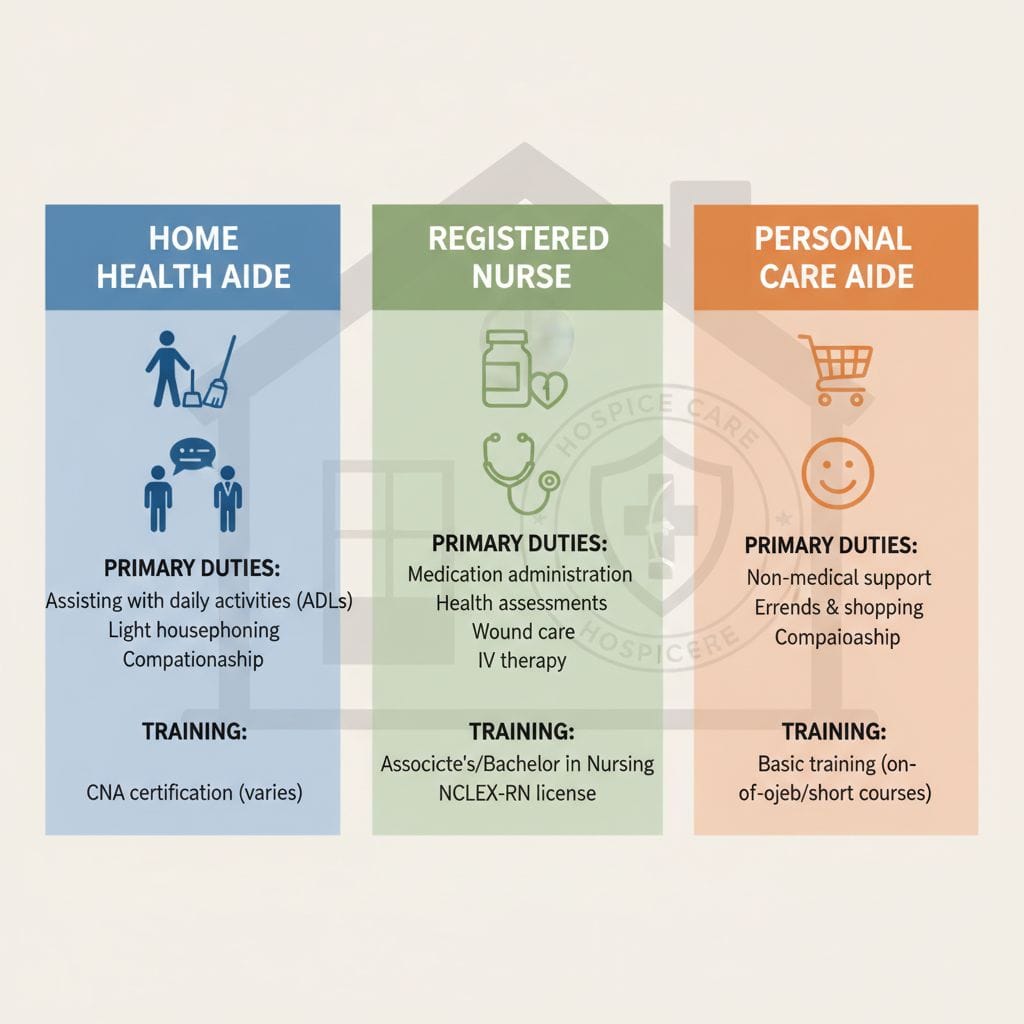
Comparison of home health aide, nurse, and personal care aide roles in hospice care
Deep Dive into Qualifications and Coverage
Training and Certification Paths
Becoming a certified care provider as a home health aide involves a structured path that combines education, hands-on practice, and evaluation. We guide our aides through this process at Amara Hospice Care, emphasizing the skills needed for effective hospice support. The journey typically begins with 75 hours of training, split between classroom instruction and practical skills training.
- Enroll in an approved training program (typically 75 hours over 4-6 weeks).
- Complete supervised clinical hours demonstrating aide competencies.
- Pass the state certification exam administered by the Michigan Department of Licensing and Regulatory Affairs.
- Undergo a criminal background check and health screening.
- Join ongoing professional development, such as workshops on end-of-life care.
Medicare Eligibility for Aide Services
Navigating Medicare coverage for home health aides can feel overwhelming, but understanding the basics empowers families to access needed support through Amara Hospice Care. Medicare Part A covers hospice benefits, which include intermittent home health aide services as part of a comprehensive plan, while Part B may cover standalone home health under specific conditions. Eligibility hinges on being homebound with a doctor’s order for intermittent skilled nursing, but hospice expands this to terminal illnesses with a prognosis of six months or less.
Key differences arise in how services are delivered. Under standard home health, aides provide part-time help with activities of daily living, limited to a few hours weekly. In hospice, coverage integrates aides into a multidisciplinary team offering pain management, psycho-social services, and even hospice massage therapy for comfort, providing more holistic body and soul care.
| Aspect | Home Health Aide Alone | Under Hospice Care |
|---|---|---|
| Eligibility | Homebound, doctor-ordered | Terminal illness certification, prognosis 6 months or less |
| Services Covered | Part-time aide support | Intermittent aide plus full multidisciplinary team |
Practical Applications and Cost Considerations
Daily Routines of Home Health Aides
- 7:00 AM – 9:00 AM: Morning hygiene and grooming, including hospice personal care assistance like oral care and skin checks to prevent discomfort.
- 9:00 AM – 11:00 AM: Meal preparation and feeding, ensuring hydration and nutrition while chatting to build emotional bonds.
- 11:00 AM – 1:00 PM: Light activities, such as short walks in the home or recreation tailored to energy levels, with volunteer support if desired.
- 1:00 PM – 3:00 PM: Rest period with monitoring for pain management cues, coordinating with our 24/7 on-call nurses.
- 3:00 PM – 5:00 PM: Afternoon companionship, perhaps family visits or psycho-social check-ins by our social workers.
- 5:00 PM – 7:00 PM: Evening meal and bedtime preparation, including medication reminders and a soothing wind-down routine.
Accessing and Budgeting for Services
| Factor | Standalone Home Health Aide | Hospice-Inclusive Aide Services |
|---|---|---|
| Hourly Rate Range | Varies by location and experience | Covered under Medicare for eligible patients |
| Additional Coverage | Limited to specific needs | Includes therapies, nursing, bereavement |
Advanced Topics in Home Health Aide Support
At Amara Hospice Care, we elevate the role of the home health aide through advanced training tailored to end-of-life scenarios. Our team focuses on equipping aides with skills to handle complex emotions that arise during hospice journeys. This includes recognizing signs of grief in patients and families, providing compassionate listening, and fostering a sense of peace. We integrate cultural sensitivity into every care plan, ensuring that diverse backgrounds are respected—for instance, incorporating traditions like family gatherings or spiritual rituals from various heritages in Michigan communities. Aides learn to coordinate seamlessly with our multidisciplinary team, including massage therapy and music therapy, to enhance overall comfort. This specialized preparation, spanning about 40 hours of targeted education, empowers our home health care providers to deliver nuanced support that aligns with each individual’s needs.
Frequently Asked Questions
What qualifications do home health aides at Amara Hospice Care have?
Our in home caregivers are certified nursing assistants with specialized hospice training, ensuring gentle, skilled assistance for comfort and daily needs.
How does Medicare cover aide services in hospice?
Per CMS guidelines, Medicare covers eligible hospice patients’ aide visits for personal care. Physician certification is required, and we guide families through documentation—outcomes vary based on individual plans.
Navigating Home Health Aide Options
Choosing the right home health aide can make all the difference in providing quality home health care during hospice. These in home caregivers offer essential support with daily activities, ensuring comfort and dignity for patients in Michigan. Their roles, backed by proper qualifications and coverage options, integrate seamlessly with our multidisciplinary team.
Resources
- Get Compassionate Hospice Massage Therapy for Pain Relief
- Join Hospice Volunteer Program for Emotional Companionship
- Receive Dignified Personal Grooming Assistance in Hospice
- Obtain Daily Living Assistance to Enhance Hospice Comfort
- Access 24/7 On-Call Support for Hospice Peace of Mind
- Benefit from Psycho-Social Support in End-of-Life Care
- Experience Music Therapy for Hospice Emotional Well-Being
- Ensure Compliance with Medicare Home Health Service Requirements
- Discover Career Outlook and Growth for Home Health Aides